Ralph (
00:32)
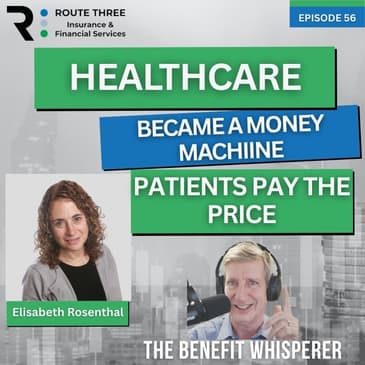
welcome to another episode of The Benefit Whisper. I'm Ralph Weber, your host. And today we have a very, very special guest, somebody I've known for a very long time, somebody that I I consider a friend, Libby Rosenthal, she was with New York Times for 22 years, an emergency room physician, KFF editor-in-chief for a while, senior contributor, and she has written a book.
Ralph (
00:54)
Which I remember Libby you you interviewed me for that years and years ago. That was called American
Elisabeth Rosenthal (
00:59)
Certainly did.
Ralph (
01:00)
Sickness. Yeah, that was the first time we met. And I I still have two copies. I I was gonna bring one to work today because I still refer to it a lot. So welcome to the show, Libby. Glad to have you on.
Elisabeth Rosenthal (
01:13)
Well, I'm glad to be here. I'm not so glad that the book is still relevant after all these years. was
Ralph (
01:19)
Well
Elisabeth Rosenthal (
01:20)
hoping the issues it raised would lead to more change than it has.
Ralph (
01:25)
Yeah, no, I I I hear you. I did a a recent sort of six episode mini-series on the history of healthcare in America,
Ralph (
01:34)
the last hundred years, starting
Elisabeth Rosenthal (
01:35)
Yeah.
Ralph (
01:36)
in 1929 when the Baylor Dallas Teachers Plan formed the first prepaid health plan, which became Blue Cross. And interestingly enough, it was designed to solve one problem, and that was liquidity.
Ralph (
01:49)
liquidity
Elisabeth Rosenthal (
01:49)
Right.
Ralph (
01:50)
for patients and for hospitals because during the Great Depression nobody had work, people were being bankrupted by hospital bills, hospitals were swimming in debt. And a hundred years later we're in the same boat. Yeah. except that it's become
Elisabeth Rosenthal (
02:01)
Yeah, here we are. Yeah. For different,
Elisabeth Rosenthal (
02:07)
entirely different reasons, of course.
Ralph (
02:09)
Exactly. This time it's by design because some of these people figured out that, hey, there is a lot of profit in opacity. recently I did some research and the time that it takes to pay the hospital slowed down from 2024 to 2025 by 3.8 days, and that increased the profit of
Ralph (
02:32)
Two of the big insurance companies, United Health and you know, one of the blue cross groups, by a hundred and seventy one million dollars a year, just that three point eight day delay.
Elisabeth Rosenthal (
02:41)
Sure. you know, they're, know, I joke that there are so many people who get these, you know, $29 bills in the mail and they're not sure if they're anything real or not,
Ralph (
02:55)
Yeah.
Elisabeth Rosenthal (
02:55)
but they just pay them and they go, well, what's $29? Because it would take you more than $29 worth of your time to fight
Ralph (
03:05)
Exactly.
Elisabeth Rosenthal (
03:06)
it.
Elisabeth Rosenthal (
03:06)
And people go, well, what's the difference? And if you think of 100 million people each writing checks for $29 that they don't
Ralph (
03:13)
Yeah. Yeah.
Elisabeth Rosenthal (
03:15)
owe, it adds up to big bucks. there's
Ralph (
03:17)
It does.
Elisabeth Rosenthal (
03:18)
so many ways to game this system financially.
Ralph (
03:22)
Yeah.
Elisabeth Rosenthal (
03:23)
And none of them are really good for patients because patients are kind of beside the point.
Ralph (
03:28)
Yeah. And it's almost like the patient has become the product, you know, where opacity is the business model and and the patients are the the profit center, you know.
Elisabeth Rosenthal (
03:38)
Yeah, someone said to me the other day, and I think this is true, that healthcare has become a kind of financial instrument.
Ralph (
03:46)
Yeah. Yep.
Elisabeth Rosenthal (
03:47)
And yeah, we just happen to be like, and our illnesses just happen to be the widgets that are getting passed through the transactions.
Ralph (
03:54)
It
Ralph (
03:56)
exactly. And it's interesting because so many people say that the healthcare system, it's not logical. It doesn't make sense. If you think of it from a system that's supposed to provide health care, that's absolutely correct. It doesn't make sense. But if you think of it for what it's actually become is a money machine, then it actually does make sense. Create confusion,
Elisabeth Rosenthal (
04:16)
Good.
Ralph (
04:18)
create opacity, create viscosity.
Ralph (
04:21)
slow down the flow of money. And when I had Mark Cuban on you know, a a couple of months ago, you know, he talked about just holding on to that float and the amount of profit that that created. And it really does. we were talking, Libby, just before the show about just that, you know, the what what Mark is doing with direct contracting.
Elisabeth Rosenthal (
04:39)
Yep.
Ralph (
04:40)
he's got 40 facilities now at costpluswellness.com.
Elisabeth Rosenthal (
04:45)
All
Ralph (
04:46)
and
Ralph (
04:47)
I you know, I think that that is that's definitely a a huge I think there's a huge opportunity in direct contracting, removing all of you know, so many middlemen, the insurance companies and and the all these other people that get in the in involved and paying the hospital quicker.
Elisabeth Rosenthal (
05:04)
Yeah. Yeah. I mean, that is absolutely true. The problem is really that, you know, now we have like an endless, you know, an endless array of middlemen who are going to try and get in the way of that. And it's, think most companies don't have.
Elisabeth Rosenthal (
05:23)
the knowledge to do direct contracting, it's fraught
Ralph (
05:26)
Right.
Elisabeth Rosenthal (
05:27)
with, you know, was the same as with doctors who were doing DTC patient care. You know, okay, what happens when your patient needs something that you haven't thought of? You know, they have to go, so it's, the problem right now, and I think, you know, direct contracting is,
Elisabeth Rosenthal (
05:47)
a partial answer for
Ralph (
05:49)
Mm-hmm.
Elisabeth Rosenthal (
05:52)
the companies and the hospitals that will agree to it. But some won't because the hospitals have such power right now that,
Ralph (
05:59)
Right. Mm-hmm.
Elisabeth Rosenthal (
06:01)
and they have political power and, you know, everyone is kind of fighting for their piece of the pie now. And how do you, you know, this system as a financial instrument, when things don't make sense, the answer is
Elisabeth Rosenthal (
06:15)
You know, Epic or Cerner, the EMRs don't work well. A hospital buys one. Then there's this intermediary, like stream of fish, you know, each one eating the other to, you know, EMR consultants to
Ralph (
06:32)
Mm-hmm.
Elisabeth Rosenthal (
06:32)
tell you how to use Epic. Like nothing, there's so much friction, and know Heat Mark Cuban uses that word a lot. There's so
Ralph (
06:39)
Yeah.
Elisabeth Rosenthal (
06:39)
much friction in the system, but
Elisabeth Rosenthal (
06:42)
How do you bypass that? It's really hard because I can rant about any part of the healthcare system.
Ralph (
06:50)
yeah. Yeah.
Elisabeth Rosenthal (
06:52)
I think one big impediment is the power hospitals have on the political scene and getting the prices they want and making sure the power.
Elisabeth Rosenthal (
07:04)
You know, it's like the land of the giants. These insurers have incredible power.
Ralph (
07:08)
Yeah.
Elisabeth Rosenthal (
07:09)
And, you know, the employees are kind of these little guys. And I mean, remember a few years ago, you were around when this was happening too. What was it? Three companies, big companies, JP Morgan Chase, and was it Google or Amazon and Berkshire Hathaway? With
Ralph (
07:23)
Yeah they all try. Mm-hmm.
Elisabeth Rosenthal (
07:26)
the tool, Gawande got together and they tried.
Elisabeth Rosenthal (
07:29)
to make it work for their employees. Now, there you're talking about like probably millions of employees dispersed across the nation and they couldn't make it work. And I was like, yeah, this should work if you think of all the market power they have, but it didn't. So how do we kind of get a wedge into a system which is so powerful and also so hardwired?
Ralph (
07:57)
Right.
Elisabeth Rosenthal (
07:57)
in
Elisabeth Rosenthal (
07:57)
today's market, like I can see, and I've been watching Mark's experiment, because I think it's really interesting. mean, I think we can see, and I've heard of, you know, in smaller communities, direct contracting with a hospital and some doctors groups, and that has worked pretty well. I mean, the Montana state employees,
Elisabeth Rosenthal (
08:22)
plan, you know,
Ralph (
08:23)
Right.
Elisabeth Rosenthal (
08:23)
they did a direct contract for their employees with all the hospitals in the state, but, you know, they were paying 245 % of Medicare. I mean, that's still a lot. I was like, really? You save money that way? But yes. So there's so much money sloshing around in the system. There are great opportunities with direct contracting. It's just that most
Elisabeth Rosenthal (
08:48)
HR departments aren't set up to do it. And I mean, I love the cost plus model because it's very transparent. What I worry about is there'll be all these new intermediaries in direct contracting and we'll end up, you know, with just more friction. it, you know,
Ralph (
09:06)
Right.
Elisabeth Rosenthal (
09:07)
I like to say it depends on the motivation of why you're,
Elisabeth Rosenthal (
09:13)
creating the system. But I think the system makes the motivation kind of, you know, so, so,
Ralph (
09:19)
Sure. Yeah.
Elisabeth Rosenthal (
09:21)
and we were talking before, you know, employers have been kind of asleep at the wheel in this regard. And I think they're waking up to it because they can't afford insurance costs anymore for their employees.
Ralph (
09:31)
No, exactly. And
Ralph (
09:34)
you know, w the the RAND study, which is sort of the benchmark that's thrown around 254%. it's sort of mis it's very much misinterpreted. Part of the study says that 254% two hundred and fifty-four is what hospitals are paid. But when you dig down really deep, that's not at all true. That's the allowable. Okay.
Elisabeth Rosenthal (
09:57)
Yeah.
Ralph (
09:58)
Because I asked Chris Whaley and Brian Bisk.
Ralph (
10:00)
Briscombe just you know a while ago, I said, let let me let me understand this. So if the let's say an allowable charge is $20,000, that represents $254. If it's split between the plan and the employee, the employees are responsible for $5,000 the plan for 15, that's $20,000 combined, that's $254.
Elisabeth Rosenthal (
10:19)
All right.
Ralph (
10:22)
Yes. Now if the employee stiffs the plan completely, hospital gets $15,000. Is that $254? No.
Ralph (
10:29)
That's 75% of 254. So
Elisabeth Rosenthal (
10:30)
Hmm.
Ralph (
10:32)
a lot of the research that I've done with Alex Chan, you know, who's also a longtime friend, one of the things that I have found is that as deductibles increase, there's what I call the deductible curve. The higher the out-of-patient, the out-of-pocket responsibility for the patient, the less they pay and the longer it takes. Balances
Elisabeth Rosenthal (
10:55)
Yeah.
Ralph (
10:56)
that are over
Ralph (
10:57)
you know, seventy five hundred dollars, the hospital collects about, I think, 16% of the balance. And that is after, in some cases, two 180 to 210 days. So so what I'm getting to, Libby, is that the direct contracting has to have some component of quick pay and no employee responsibility. And if there is, it's behind the scenes. So if the employer pays the hospital all at once,
Ralph (
11:24)
within let's say one to four weeks or whatever, and and all of Mark Cuban's contact contracts are all thirty days.
Elisabeth Rosenthal (
11:30)
Yeah.
Ralph (
11:31)
I think that's where we can improve the efficiency.
Elisabeth Rosenthal (
11:35)
Well, I hope so. You know, it's a pretty new experiment and I'm, I, I, you know, I'm waiting to see how it works. I'm, I've become such a skeptic in the sense of, know, I've, I'm looking at vertical consolidation now. In
Ralph (
11:50)
Yes.
Elisabeth Rosenthal (
11:50)
fact, the interview I'm doing after this is with someone at the FTC about that. So, you know, hospitals and on the insurer side,
Elisabeth Rosenthal (
12:00)
You know, insurers, was on a flight to Minneapolis recently and I was sitting next to this kid and I was like, what are you doing? He said, I'm in private equity. And I'm like, explain to me what the game is when private equity is buying up doctors practices. And he said, well, we sell the multi-united healthcare. you
Ralph (
12:21)
Yeah.
Elisabeth Rosenthal (
12:22)
know, that's happening on the insurer side. Meanwhile, hospitals are
Elisabeth Rosenthal (
12:26)
buying up physician practices. you know, I guess the direct contracting, there's such asymmetric bargaining power and that's something that employers have to deal with. You know, I don't know of anyone who's doing something like Mark is doing.
Elisabeth Rosenthal (
12:45)
trying to do direct contracting for hospitals. mean, he's done amazing things for, in the pharmaceutical sphere with
Ralph (
12:51)
Yeah.
Elisabeth Rosenthal (
12:52)
cost plus drugs. But you know, the insurers say, yeah, sure you can use cost plus drugs, but it's not gonna count against your deductibles. you know, it's, you know, they're fighting back as hard as they can, as they will
Ralph (
13:04)
Sure.
Elisabeth Rosenthal (
13:05)
against direct contracting. mean,
Ralph (
13:07)
Mm-hmm. Yeah, of
Ralph (
13:08)
course they will. Yeah. That, you know, and and it's it it's all to make more money, you know, and and when I talked to Kevin Schulman and David Schinker, you know, David says that $1.7 trillion a year is just for moving money. That's how much we spent, just the friction. Yeah.
Elisabeth Rosenthal (
13:24)
Friction. Friction. Yeah, yeah,
Elisabeth Rosenthal (
13:28)
no, I'm not surprised. mean, and for that we get lower lifespans in many other developed
Ralph (
13:34)
Yeah.
Elisabeth Rosenthal (
13:34)
countries, higher infant mortality rates.
Ralph (
13:38)
Mm-hmm.
Elisabeth Rosenthal (
13:39)
We have a big and getting bigger chunk of people uninsured because of the loss of ACA subsidies, which,
Ralph (
13:46)
Right.
Elisabeth Rosenthal (
13:47)
you know, but it...
Elisabeth Rosenthal (
13:49)
The reason those are necessary is because the insurer rates are going up so much. so, you know, how to break that cycle? mean, you know, insurers, yes, there's a ridiculous amount of profit generated by the friction, but we've allowed for-profit insurers. what do we expect them to do? Like,
Ralph (
14:12)
Mm-hmm. Yeah.
Elisabeth Rosenthal (
14:13)
it's just not Mother Teresa, you know, selling you
Ralph (
14:16)
Yeah.
Elisabeth Rosenthal (
14:16)
Cigna.
Ralph (
14:17)
Right, right.
Elisabeth Rosenthal (
14:18)
So I guess, you know, their idea of success is not my idea of success or a company's idea of successful healthcare for their employees. It's their idea is, I'm sorry to so skeptical about it, but you know, how can we deliver the cheapest care and earn the most money for our shareholders?
Elisabeth Rosenthal (
14:41)
Now, you know, Germany has a lot of insurers, but they all have to be not for profit. And, you know, I say that and then I think, well, yeah, all of, you know, two thirds of our hospitals are not for profit, but they don't act any different than the for profit ones. So everything in our system acts according to its revenues and financial motives. And I used to put up
Elisabeth Rosenthal (
15:06)
like a Venn diagram of, know, this is what's good for healthcare, this is what's good for profit. And there's a little overlap, but not a lot. And there should be,
Ralph (
15:14)
Little overlap, yeah. Right.
Elisabeth Rosenthal (
15:18)
you know, I'm not opposed to people making money, I'm not, but
Ralph (
15:21)
Mm-hmm.
Elisabeth Rosenthal (
15:22)
you know, the overlap should be substantial at least.
Ralph (
15:25)
Right. Yes. No, I agree. I agree. and just before the show, we were talking about what Don Berwick said about that you know who who has negotiating power in any negotiation? It's the purchaser, the buyer. But who is
Elisabeth Rosenthal (
15:39)
Right.
Ralph (
15:40)
the buyer? Is it the patient? Is it the insurance company? It it's really convoluted with with any third-party payer system, but at the end of the day.
Ralph (
15:49)
Who pays the most money other than Medicare, Medicaid VA, is the employer, because 76%
Elisabeth Rosenthal (
15:55)
Yeah.
Ralph (
15:56)
of Americans that are covered through private insurance are self-insured. So the employer is the biggest purchaser of healthcare. And what Don said is the employers are the dog that's not barking. Now, I remember in The American Sickness, you you talked about that. You talked, you documented the patient side. so
Elisabeth Rosenthal (
16:15)
Yeah, and
Elisabeth Rosenthal (
16:15)
I said the employers are asleep at the wheel, and
Ralph (
16:19)
Yeah. Mm-hmm.
Elisabeth Rosenthal (
16:20)
they, you know, it's partly that HR departments were never made to negotiate, you know, with Cigna or UnitedHealthcare. They're these little,
Ralph (
16:30)
Yes.
Elisabeth Rosenthal (
16:31)
you know, five-person things. They deal with
Ralph (
16:33)
Yeah.
Elisabeth Rosenthal (
16:33)
people taking.
Elisabeth Rosenthal (
16:34)
disability
Ralph (
16:34)
Right.
Elisabeth Rosenthal (
16:35)
leave and they hire a benefits consultant who gives them, you know, it's like one from column B and
Ralph (
16:42)
Yeah.
Elisabeth Rosenthal (
16:42)
one from column C and, you know, they're done for the year. But meanwhile, you know, we all see that the premiums go up and there may be some cap, you know, say 10%. Well, great, you know, if my rent went up 10 % each year, you would
Ralph (
16:57)
Mm-hmm.
Elisabeth Rosenthal (
16:58)
be, you know,
Elisabeth Rosenthal (
16:59)
out of luck pretty quickly. it's
Ralph (
17:01)
Yeah.
Elisabeth Rosenthal (
17:02)
often hidden because it's so much just the premium, it's higher deductible, it's...
Ralph (
17:12)
Right.
Elisabeth Rosenthal (
17:12)
Co-insurance is the one that we see in our bill of the month project, kills so many people. They're like, wait, I thought I had a $25 copay. I'm like, no, no, no, no, no, that's... As more and more has moved to the outpatient setting.
Elisabeth Rosenthal (
17:26)
people are getting hit with these, you know, $12,000 coinsurance bills for procedures and they can't pay. know, we know from a study or a series of articles that we've been doing, Noam Levy's been doing for the last two years that 100,000 Americans have medical debt and 100, sorry, 100 million.
Ralph (
17:52)
Hundred million, right? Yeah.
Elisabeth Rosenthal (
17:56)
if we're
Ralph (
17:56)
Yeah.
Elisabeth Rosenthal (
17:57)
only worth that, 100 million have medical debt. And something like 20 % of them never believe they'll be able to pay it off in their lifetimes. And you see these payment plans where when I do bill of the month, we have this project called Bill of the Month with NPR and the Washington Post. And
Ralph (
18:17)
Mm-hmm.
Elisabeth Rosenthal (
18:18)
people have these payment plans that just...
Elisabeth Rosenthal (
18:22)
$200 a month sucked out of their income forever and
Ralph (
18:25)
Yeah. Mm-hmm.
Elisabeth Rosenthal (
18:28)
they'll never be able to pay back.
Ralph (
18:30)
Right.
Elisabeth Rosenthal (
18:30)
you know, as you said, it's not that the hospitals are really making off like bandits because a lot of people can't pay that much, boy, they really try and squeeze money out of people, you know, putting liens on homes and...
Ralph (
18:46)
Yes.
Elisabeth Rosenthal (
18:47)
you know, keeping social security checks. you
Ralph (
18:50)
Yeah.
Elisabeth Rosenthal (
18:51)
know, it's really inhumane and it's certainly
Ralph (
18:53)
Mm-hmm.
Elisabeth Rosenthal (
18:54)
not good medicine.
Ralph (
18:56)
Yeah.
Elisabeth Rosenthal (
18:57)
you know, and I think states are trying different things to intervene in this messy system. You know, there's some are trying to offer a public option, which
Elisabeth Rosenthal (
19:08)
is kind of interesting. mean, it is interesting because it says to the commercial insurers, you know, it kind of throws down a gauntlet saying, if this isn't as good as a public option, people will walk with their feet. then there's this, then you get into the debate of what should a public option look like? Will it look like Medicaid, Medicare, something in between? And
Ralph (
19:30)
Mm-hmm.
Elisabeth Rosenthal (
19:31)
it always gets stuck on the
Elisabeth Rosenthal (
19:33)
How are we going to pay for that because
Ralph (
19:35)
Mm-hmm.
Elisabeth Rosenthal (
19:36)
the prices are so damn high that the providers are getting right now. So,
Ralph (
19:41)
Yeah.
Elisabeth Rosenthal (
19:41)
you know, and we're allergic to some kind of price setting or price capping. So here we are. Yes, you know, I'm always hopeful when I, and I love talking to, to groups like the, think it's called the
Elisabeth Rosenthal (
19:56)
It used to be called the Pacific Health Care, it's a buyer's group or a bunch of companies. Now it's called, I think, the Employers Group on Health. And, you know, they try and get together and negotiate with the big insurers on behalf of a whole bunch of mid-sized companies. you know, I've yet to see it make the kind of impact I would like.
Elisabeth Rosenthal (
20:24)
They're
Ralph (
20:24)
Right.
Elisabeth Rosenthal (
20:25)
certainly better and worse,
Ralph (
20:26)
Mm-hmm.
Elisabeth Rosenthal (
20:27)
but my foundation, because it's into kind of radical transparency about healthcare,
Ralph (
20:36)
Mm-hmm.
Elisabeth Rosenthal (
20:36)
we see every year how much our healthcare plan costs, and it's getting on 40 % of a salary now.
Ralph (
20:48)
Yeah.
Elisabeth Rosenthal (
20:49)
Wouldn't people rather have like,
Elisabeth Rosenthal (
20:51)
reasonably priced healthcare and more money to spend. I mean, I wrote something for the Washington Post a few months ago saying like, guys, forget about the price of gas and eggs. Like, look at your healthcare costs. Man, that's what's really, I don't know how people do it. I really don't.
Ralph (
21:08)
No.
Ralph (
21:09)
No, I I I agree. And how people do it and then not get results, you know, and and not knowing the price. I mean, what is the the price in healthcare? If you bought something from Amazon and you found out three months after you bought it how much it was, and only going through after going through three or four intermediaries, I mean that's that's how opaque it is. That's how how much friction. and the denials, and I mean we could go, we could go on and on, but
Ralph (
21:35)
You know, where does it end? But but I I want to pick up on something you said a
Elisabeth Rosenthal (
21:39)
Okay.
Ralph (
21:39)
minute ago. And this is in line with with what Don was saying about you know employers just not getting involved, giving it to HR, because
Elisabeth Rosenthal (
21:48)
Yeah.
Ralph (
21:49)
CEOs think this is an HR problem. Because when and I've developed a tool, and it's called the denominator audit. As a matter of fact, if you go to denominator audit.com
Ralph (
22:00)
You can put in just a few simple numbers. What is your top-line revenue? How many employees do you have? How much are you spending on healthcare? And instead of you know talking about I could save you 25% of your healthcare costs, and if healthcare costs are only 4% of the total revenue, it's only a percent. But if your after-tax profit, and most companies don't have after-tax profit that's in the double digits,
Elisabeth Rosenthal (
22:28)
Yeah.
Ralph (
22:29)
As a percentage of that, it's a much different picture. And
Elisabeth Rosenthal (
22:32)
Yeah, for sure.
Ralph (
22:34)
I think that's where hopefully employers will say, Yeah, we we have to do something. You know, and
Elisabeth Rosenthal (
22:41)
Yeah,
Elisabeth Rosenthal (
22:41)
think, I think, you know, one little thing that we, I do have in our corner and I wish more employers had this for now, you know, until
Ralph (
22:50)
Mm-hmm.
Elisabeth Rosenthal (
22:50)
there's, is, you know, my foundation has a relationship with our primary insurer. And if things are not going right, there is a person in the HR office who knows a person to call at the insurer.
Elisabeth Rosenthal (
23:06)
to try and make things right. I I don't think most HR offices have that. I mean, that's necessary now to a kind of troubleshooter. I mean, I think what we get so often now in our bill of the months is, you know, one of them I did myself was about a young woman who got a cochlear implant. you know, the hospital, she had...
Elisabeth Rosenthal (
23:30)
pre-authorization for it, but the insurer said the hospital coded it wrong and the hospital said no. The insurer was wrong. And this poor young woman was like,
Ralph (
23:41)
Mm-hmm.
Elisabeth Rosenthal (
23:42)
why am I playing referee? She's setting up three way calls between, you know, where she did everything right and yet she's stuck with this
Ralph (
23:50)
Right.
Elisabeth Rosenthal (
23:52)
huge bill that she knows in the end she's not gonna have to pay.
Ralph (
23:56)
Mm-hmm.
Elisabeth Rosenthal (
23:57)
but
Elisabeth Rosenthal (
23:57)
she's very well educated. She has the kind of job where she can argue. And she has kept proof of the pre-authorization. And she had an employer that was, she worked for a state that said like, guys, you guys decide, but
Ralph (
24:14)
Mm-hmm.
Elisabeth Rosenthal (
24:14)
I mean, they often don't decide and patients are left holding the bag. And this is,
Ralph (
24:21)
Yeah.
Elisabeth Rosenthal (
24:21)
what we've seen in the, you know, one of the few little triumphs I point to of our work and my work is
Ralph (
24:30)
Yeah.
Elisabeth Rosenthal (
24:30)
the No Surprises Act, But so when people got surprised out of network bills, did, or in an emergency, they didn't have to pay the insurer and the providers are supposed to work it out. You know, with...
Elisabeth Rosenthal (
24:44)
That's kind of a great thing, but instead of saying, we're just going to pick a number that they pay or they only pay what they would pay in network, they end up with this nutty baseball style arbitration where, you know, who wins in that? Not the patient, the providers do and they get, you know, now there are lawyers who do the baseball style arbitration for the providers.
Elisabeth Rosenthal (
25:11)
And so, you know, there's yet a system that was a new law that was supposed to solve a problem, created new business opportunities and didn't solve the problem very well or not fully. And I said, like, when I heard they were going to do baseball-style arbitration, I was like, gee, that's great. They're like, you know, what, I'm obviously not a sports fan, but, know, 400.
Elisabeth Rosenthal (
25:35)
baseball players who are negotiating with, maybe it's a thousand with 20 something teams. They're like, you know, 7,000 dermatologists in, you know, the suburbs of New York City. Like you can't, you're not going to be able to negotiate each bill. I mean, that's nuts. know, who,
Ralph (
25:55)
Right.
Elisabeth Rosenthal (
25:55)
it was such a crazy idea, but it was all they could get through. So, you know, it's just.
Elisabeth Rosenthal (
26:01)
I'm endlessly in awe of how incredibly quick this system is to see a new business opportunity and go after it and how employers are.
Elisabeth Rosenthal (
26:14)
You know, there's not a sector that's saying we're going to stand up for employers. They're not banding together. The unions get really good insurance, but everyone's out, you know, for like what we can have for ourselves. you know,
Ralph (
26:28)
Mm-hmm.
Elisabeth Rosenthal (
26:28)
you can get a good rate maybe for state employees, but what's going to happen probably, it means that the other people who are not working for the state end up
Elisabeth Rosenthal (
26:38)
paying more so the state employees can have it. So it's such an agile system in terms of its business practices. It's kind of awesome from a Harvard Business School point of view, I guess.
Ralph (
26:51)
Right. Yeah.
Ralph (
26:52)
I I remember you you know Reggie Hertzinger, right at Harvard? Yeah, yeah.
Elisabeth Rosenthal (
26:56)
Yeah, sure, sure.
Ralph (
26:57)
I used to, you know, occasionally she'd invite me to to talk to one of her classes, you know, which I did way back. She's still active there, not as active, but you know, it is it is a classic case for that. And the thing is there there are solutions.
Ralph (
27:14)
There are a lot of special interest groups that get in the way and try to prevent them, but it is fixable. You know, it it's just it it's frustrating because the right people aren't getting involved and they aren't saying enough. And, you know, it's like any kind of change. Eventually the math is going to make the decision, you know, if people don't get involved, and then we don't know what we'll have.
Elisabeth Rosenthal (
27:38)
Yeah, do think, know, but I, how do I say this? I thought 10 years ago we were at a tipping point. Now I think we're kind
Ralph (
27:44)
Right, right.
Elisabeth Rosenthal (
27:45)
of over the edge and hoping to crawl back up because, you know, it is very hard to see how you undo the insanity in
Ralph (
27:55)
Mm-hmm.
Elisabeth Rosenthal (
27:55)
this system. mean, in a system of direct contracting, you don't really need like,
Elisabeth Rosenthal (
28:01)
these armies of billers and coders and negotiators. So
Ralph (
28:03)
Yeah, right. Mm-hmm.
Elisabeth Rosenthal (
28:05)
it's a jobs program, right? So, you know, the hospitals will say to the mayor, well, we can't do that because there are only have all these people who we employ and, know,
Ralph (
28:15)
Yeah.
Elisabeth Rosenthal (
28:15)
forget about AI direct contracting, you know, will kind of obviate the need for, you know, 20 % of the what we call the health care workforce. I mean, it really
Elisabeth Rosenthal (
28:26)
disturbs me when you know we look at the jobs numbers each month and the one sector that's growing is health care and everyone goes it's not a good thing I'm like I don't think so I mean it's you
Ralph (
28:38)
Right.
Elisabeth Rosenthal (
28:39)
know you know if I thought it was really growing in quality care for older you know adults or homebound adults or I would say great but it's not you know I don't think that's where it's growing so
Ralph (
28:52)
No, no, no. It's growing in complexity. I mean, if you look at the, remember that that chart, David Himmelstein and Steffi will find out about the growth of administrators versus physicians. I
Elisabeth Rosenthal (
29:02)
Yeah.
Ralph (
29:02)
mean, that's that's what it is. It's the administrators.
Ralph (
29:06)
If you look at our healthcare spending, it's larger than the than the GDP of Germany. You know, it it's second only to the GDP of of the US and or China. Germany is the third GDP in the in the world.
Elisabeth Rosenthal (
29:18)
Yeah.
Ralph (
29:19)
Our healthcare spending is larger than
Elisabeth Rosenthal (
29:21)
Yeah.
Ralph (
29:21)
the third largest GDP.
Ralph (
29:23)
So, and and we're certainly not the third largest country for population. So it it does, it has to change. We, you know, we just can't going keep going. one of the things that everybody's talking about is AI. Maybe AI
Elisabeth Rosenthal (
29:36)
Yeah.
Ralph (
29:36)
is gonna fix this. And the way I see it is do you remember that film with Howard Beale Network? Yeah.
Elisabeth Rosenthal (
29:42)
Yeah, yeah.
Ralph (
29:43)
It it it's like
Ralph (
29:45)
I feel like it's like putting a jet engine on top of a Ford Pinto with a full tank of gas and expecting some good results. You're just going to hit that pothole faster and it's going to implode. So AI on top of a broken system just means that black box is speeding down the highway quicker. And you
Elisabeth Rosenthal (
30:06)
Yeah,
Elisabeth Rosenthal (
30:07)
and I get endless emails in my inbox every morning from people who have a great AI for healthcare, and I'm like,
Ralph (
30:16)
Mm-hmm.
Elisabeth Rosenthal (
30:17)
great use of AI, and people are making good money writing newsletters and courses about AI for healthcare, but what's the goal?
Elisabeth Rosenthal (
30:26)
It's greater efficiency, greater return on investment. You don't have to pay the salaries of, you know, I was just corresponding with someone who was asking about AI scribes
Ralph (
30:37)
Mm-hmm.
Elisabeth Rosenthal (
30:37)
in health care, you know. Yeah, it's good for doctors. saves them time. Pity all those poor young people who took courses to become certified as medical scribes because...
Elisabeth Rosenthal (
30:49)
they're out of the picture now. And I did a little
Ralph (
30:51)
Mm-hmm.
Elisabeth Rosenthal (
30:51)
experiment with my rheumatologist where he was kind of an early adapter, adopter. And, you know, we looked at the AI generated notes and they were pretty good, but he had to go through them. You know, if you're just thinking about efficiency, wow, it's way more efficient, but it also creates problems that had he not corrected them.
Ralph (
31:14)
Right.
Elisabeth Rosenthal (
31:14)
they would have been carried on in perpetuity. And
Ralph (
31:18)
Yes.
Elisabeth Rosenthal (
31:18)
there was a very good op-ed in the New York Times Magazine just last week about that a physician, Helen Oyang wrote about how using AI in medicine and what's lost when you do that. For care, for care,
Ralph (
31:33)
Mm-hmm. Yes. Right.
Elisabeth Rosenthal (
31:36)
more efficient, but that's, know, if your goal is profit.
Elisabeth Rosenthal (
31:40)
more efficient is the goal, you know, more efficient so long as you don't get in trouble for really bad care, which
Ralph (
31:47)
Right.
Elisabeth Rosenthal (
31:48)
we seem not to have, you know, people ask me, you know, how could they, how could they keep, I wrote an article for the Atlantic recently about my husband who died last year was stuck in, yeah,
Ralph (
31:58)
Yeah, I was sorry to hear that. Mm-hmm.
Elisabeth Rosenthal (
32:01)
thank you.
Elisabeth Rosenthal (
32:02)
He was boarding in the ER for four days in his last admission. And
Ralph (
32:07)
Mm-hmm.
Elisabeth Rosenthal (
32:09)
people say, well, why do we let that happen? And I'm like, well, is there a CMS police force? No, we
Ralph (
32:18)
Mm-hmm.
Elisabeth Rosenthal (
32:18)
let it happen because there's nothing saying it can't happen. And it's...
Ralph (
32:22)
Right, right.
Elisabeth Rosenthal (
32:24)
It saves hospitals money to count someone as an inpatient when they're in fact sitting in a hallway, even though it's inhumane and it's terrible care. But,
Ralph (
32:29)
Yeah. Right, right. Mm-hmm.
Elisabeth Rosenthal (
32:34)
you know, I would love it. You tell me, what do you think is the answer? How do you drive a wedge into something that is so powerful in this country and which people hate so much? I mean, I think that's the thing. People
Ralph (
32:47)
Yeah. Yeah.
Elisabeth Rosenthal (
32:49)
are waking up to the fact that
Elisabeth Rosenthal (
32:51)
You know, try, and this has changed in the last 10 years, you know. We used to say, well, you know, they wait a long time in Canada for things, you know. Try and get an, try and find an appointment with a new primary care doctor in New York or
Ralph (
33:05)
Mm-hmm.
Elisabeth Rosenthal (
33:06)
a neurologist, you know. you know, how's October for you? You know, we
Ralph (
33:10)
Right. Right.
Elisabeth Rosenthal (
33:11)
wait endlessly. Now, if you think you might want a knee replacement,
Elisabeth Rosenthal (
33:16)
which is really profitable, you
Ralph (
33:18)
Mm-hmm.
Elisabeth Rosenthal (
33:18)
got it done tomorrow, whether you need it or not, right? So I
Ralph (
33:20)
Sure. Exactly. Yeah. Yeah.
Elisabeth Rosenthal (
33:23)
think it's, you I always kind of joke that I'm just gonna keep banging my head against the wall writing and talking about this until something changes. And I think employers have woken up and voters have woken up, but they don't know.
Elisabeth Rosenthal (
33:43)
They haven't been presented with what seems a simple alternative. it's like, you know, Donald Trump said, who knew healthcare was so complicated? You know, most people, they sign up for a plan they hate and hope they never get sick, Knowing that they won't be able to pay the deductible if they do. I, know, employers, they're just not made for this. So, you know.
Ralph (
34:07)
Right, right.
Elisabeth Rosenthal (
34:08)
And yes, we can have a new form of intermediary to try and do a Hail Mary around all this messy infrastructure. But there's going to be a lot of resistance from the messy infrastructure that's doing very well. Thank you from
Ralph (
34:23)
Yes.
Elisabeth Rosenthal (
34:24)
its existence.
Ralph (
34:25)
Yeah. Exactly. so what I'm doing is I'm I'm like the work that I'm doing with AI is, you know, as I said, if you strap it on top of a broken system, it's just gonna accelerate the chaos and and increase the confusion. But you know, I've I've developed sort of a suite the denominator audit, which I which I told you about, but also I've I've developed something called healthcare genius.com.
Ralph (
34:51)
Where it's not completely ready yet, but what
Elisabeth Rosenthal (
34:54)
We both.
Ralph (
34:55)
it's going to do is allow and and the thing is, Libby, with you know, millennials and Gen Z and you know, people are more used to kind of they want to know for themselves. They wanna figure it out. So I've got a
Elisabeth Rosenthal (
35:10)
Yeah.
Ralph (
35:10)
suite of tools where my insurance denied me. Why? You can feed it into the system and it'll tell you why, and it'll tell you how to fight it.
Ralph (
35:20)
If you look at the Medicare Advantage stats, the number of denials, I forget the exact number, but 89% of those that were denied just never fought it. Only 11% did.
Elisabeth Rosenthal (
35:31)
Yeah, no, it's...
Ralph (
35:33)
And those that those that fought it, of those 11%, which represent, I think, 7.7 million people, of those 80% of the denials were overturned. So the denials were false denials. They were just delays, you know.
Elisabeth Rosenthal (
35:48)
Yeah,
Elisabeth Rosenthal (
35:49)
and you know, the problem is, of course, and I think in the commercial market, I did a story where someone told me that something like 5 % of denials are fought, and that's partly because it's so much trouble. You know, you don't know how
Ralph (
36:06)
Yeah. Yeah.
Elisabeth Rosenthal (
36:08)
to start. They're like, fill out this form and, you know, it's the wrong code and blah, blah, blah. It's just so complicated.
Elisabeth Rosenthal (
36:16)
And yeah, no, that's, I think that kind of thing is helpful. And I always want, you know, we the patients to stand up and say,
Ralph (
36:24)
Mm-hmm.
Elisabeth Rosenthal (
36:25)
you know, no, that's wrong. But boy, it takes a lot of, a lot of gumption and a lot of fight. you know, and then when, when the billing office says, no, it's coded right.
Elisabeth Rosenthal (
36:38)
You know, our bill of the month patients, I love them because they're like, they go to the CMS database and look, you know, look up the correct coding initiative and they go to their state attorney general and they've fought with the hospital and they've fought with their insurer and they've, you know, and they end up going to like, we're like the police, you know, I'm going to report you to bill of the month. And it's like, yeah, we can get it fixed often because
Elisabeth Rosenthal (
37:06)
You have a journalist calling the hospital and the insurer and they're like, yeah, yeah, yeah, that, is a right, we'll fix it. But, you know,
Ralph (
37:13)
Right.
Elisabeth Rosenthal (
37:14)
it's just, it's a heavy lift. And I think more people challenging denials and knowing how to do it is a really important part of, and, I, again, I think if you have an employer, that should be a function of HR offices. I mean, there should be a designated person who
Elisabeth Rosenthal (
37:32)
you don't have to fight your own, you know, and this does actually work quite well at KFF, the Kaiser Family Foundation, because, you know, we have a relationship with our insurer and the foundation will move if, you know, someone in our office knows the right person has a contact at our insurer and can...
Elisabeth Rosenthal (
37:54)
You know, you can say, here, look at this, this is wrong. And it's often taken care of. You often get a call in a day or two saying, yeah, you'll get the pre-auth code by
Ralph (
38:06)
Yeah.
Elisabeth Rosenthal (
38:07)
Monday. you know, but it's a messy process and companies may not want to hire that person. An AI tool will help certainly people know when they're in the right, which is really valuable and know.
Ralph (
38:20)
Mm-hmm. Right.
Elisabeth Rosenthal (
38:22)
like how to go about doing this otherwise impregnable thing.
Ralph (
38:27)
Right.
Elisabeth Rosenthal (
38:28)
But, you know, I hope this works. I'm not sure collectively if there are enough people with the knowledge. And I mean, like you said, young people are very motivated to do this kind of thing and used to doing things with apps.
Elisabeth Rosenthal (
38:45)
But I think the other side of that that we should be thinking about as a country is, there's a real among young people, and I happen to have two of them, a real startup culture. My daughter has a company that's been quite successful. She can't hire people because she can't afford to give them health insurance. That would break the bank for her.
Ralph (
39:07)
Right.
Elisabeth Rosenthal (
39:07)
company, even though it's a successful. So, you know, they, they were first contractors and, you know, they buy insurance on the New York state exchange, which luckily is not a bad exchange. But, um, you know, if we say we're, and we always talk about this, you know, every president, we're a nation of entrepreneurs and small businesses. You can't be in this, in this culture. You can't.
Ralph (
39:33)
No, you can't.
Elisabeth Rosenthal (
39:35)
Because of insurance, not because of anything else. It's
Ralph (
39:36)
Mm-hmm. Right.
Elisabeth Rosenthal (
39:38)
because of insurance. And that's, to me, like, as a society, something we should really worry about because the ripple effects of our failure to have an affordable healthcare system on companies and on our future as a producer of new ideas, I think, is really devastating.
Ralph (
39:59)
Totally. Yep.
Ralph (
40:01)
so who who really profits from the confusion? That that's kind of the my my last question that I have for today.
Elisabeth Rosenthal (
40:08)
I think in my book someone said everyone's feeding
Ralph (
40:11)
Yeah.
Elisabeth Rosenthal (
40:11)
at the trough, insurers, pharmaceutical manufacturers, PBMs,
Ralph (
40:16)
Mm-hmm.
Elisabeth Rosenthal (
40:17)
doctors, to a lesser extent actually. They're getting more more radicalized.
Ralph (
40:19)
Yeah. Mm-hmm.
Elisabeth Rosenthal (
40:24)
Something that I didn't even anticipate when I wrote the book was private equity. Private equity just bought the radiology practice.
Elisabeth Rosenthal (
40:33)
I go to and
Ralph (
40:35)
Mm-hmm.
Elisabeth Rosenthal (
40:37)
now, you know, what was formerly a pelvic and abdominal sono, one thing is now, a sono of your uterus and a sono of your left kidney and a sono of your right. It's, you know, the billing is totally unbundled. They're out of a network. I'm not, you know, I'm not going there anymore. But who's profiting off that? No one having anything to do with healthcare. It's
Ralph (
40:59)
No,
Ralph (
40:59)
exactly.
Elisabeth Rosenthal (
41:00)
So I think, you know, should we, you know, and then you get into the, you know, I'm not anti-business, but should private equity really be having a role in healthcare? You know, the studies have all shown that when private equity acquires a healthcare property from, whether it's a practice or a hospital or a facility, the quality of the care goes down and the prices go up.
Elisabeth Rosenthal (
41:24)
Why? But we don't have a way to say, no, you know, we just have, there's no mechanism. And yes, the employers should bind together. And I think maybe it was before we were recording, we were talking about Chase and Berkshire Hathaway and Amazon trying to do this. And they have millions of employees all across the country.
Elisabeth Rosenthal (
41:46)
and they had a tool, Gawande is their CEO or something and they couldn't do it. why, why didn't that work? I mean, I'm still, I was hoping that would be a model for, you know, kind of a yes, we can to businesses,
Ralph (
42:00)
Right.
Elisabeth Rosenthal (
42:01)
but I don't know. I, it was a big question mark to me. Why didn't that work? Our providers so powerful and insurers so powerful that
Elisabeth Rosenthal (
42:11)
you know you essentially need of medicare to have or state employees union to have any kind of
Elisabeth Rosenthal (
42:20)
market power.
Ralph (
42:21)
Yeah, I I think it could work. It's just the incentives. I I don't think the incentives were adjusted enough. They they just thought with, you know, millions of lives we could negotiate better. But I I think the incentives needed to be changed just a little bit. I think it's doable, Libby. I I think it is. Yeah.
Elisabeth Rosenthal (
42:40)
And you too. mean, it's
Elisabeth Rosenthal (
42:41)
not like this is, you know, violating Einstein's law of
Ralph (
42:45)
Yeah.
Elisabeth Rosenthal (
42:46)
physics. It's just that we don't have, there's too much money sloshing around that wants it not to
Ralph (
42:52)
Yeah. Right.
Elisabeth Rosenthal (
42:54)
happen. I mean, one thing that would help that, you know, I know we all, it's a favorite of all of us who think about healthcare. Why don't we have site neutral payments yet? Because
Ralph (
43:04)
Well, like like the state of Maryland, the all payers, that that seemed to work pretty well. Yeah. Yeah.
Elisabeth Rosenthal (
43:07)
Yeah, that worked fine. That worked fine. You know,
Elisabeth Rosenthal (
43:10)
I had a neurologic problem. a, what do call it, a spinal tap at Hopkins, you know, a thousand bucks. They wanted like a second opinion. And it was in a, you know, a doctor's office procedure room in the hospital, outpatient department. They went, I booked one at NYU and you know.
Elisabeth Rosenthal (
43:29)
There it's done in a procedure suite by interventional radiology, I mean, for $22,000. So
Ralph (
43:39)
Wow.
Elisabeth Rosenthal (
43:40)
why don't we say a spinal tap is a spinal tap and
Ralph (
43:44)
Mm-hmm.
Elisabeth Rosenthal (
43:45)
you can do it wherever you want as long as it's safe and we're only gonna pay you that much. that
Ralph (
43:50)
Yeah, e exactly.
Elisabeth Rosenthal (
43:52)
seems like a total no-brainer and yet who's gonna say that?
Ralph (
43:56)
Right.
Elisabeth Rosenthal (
43:56)
A company doing direct contracting could, but what
Ralph (
44:00)
Yep, exactly.
Elisabeth Rosenthal (
44:02)
a hospital would fight back, a hospital that had bought doctors practices and surgery centers would fight back because they don't want the doctors doing that in their office
Ralph (
44:12)
Right.
Elisabeth Rosenthal (
44:13)
anymore because they make much more money if they do it in the hospital. I
Ralph (
44:16)
Yeah, exactly. Exactly.
Elisabeth Rosenthal (
44:20)
think the direct contracting is
Elisabeth Rosenthal (
44:23)
hopeful thing I see how to grow it into something powerful. Like I said, plus drugs has become something powerful for patients, so maybe this
Ralph (
44:35)
Right. Right.
Elisabeth Rosenthal (
44:37)
will too.
Ralph (
44:37)
Yep. I hope so. I hope so. We're building software to, you know, make it to help it. So hopefully that'll that'll work. So Olivia, if people want to follow you, find out a little bit more about what you're doing, how how can they f you know, re follow you and read you and
Elisabeth Rosenthal (
44:50)
well, I'm, I'm, I'm,
Elisabeth Rosenthal (
44:53)
I'm on LinkedIn. I'm on Rosenthal. I'm Rosenthal health, health, Rosenthal health on Twitter. I, have not dived into Instagram or TikTok yet, but,
Ralph (
45:05)
Mm-hmm.
Elisabeth Rosenthal (
45:05)
I have, you know,
Elisabeth Rosenthal (
45:07)
I'm writing here and there. You can look at the KFF health news website and I have got a new book probably in the works.
Ralph (
45:14)
great.
Elisabeth Rosenthal (
45:15)
kind of a follow up.
Ralph (
45:17)
I can't wait.
Elisabeth Rosenthal (
45:18)
So yeah, book publishing is my kids who are like, you know, the, the Instagram generation are like,
Ralph (
45:26)
Mm-hmm.
Elisabeth Rosenthal (
45:26)
just put it out, everything on Instagram you want to say, or get a sub stack and you know,
Elisabeth Rosenthal (
45:31)
Right now, KFF is my overlords and they do the right thing about healthcare.
Ralph (
45:38)
Right. Yeah, yeah. I think they do.
Elisabeth Rosenthal (
45:41)
It's very hard. Even when I was working at the Times where I loved the place and had a great 22 years, it made me a little nuts to be doing these stories about the high...
Elisabeth Rosenthal (
45:52)
overpriced drugs and then there were pop-up ads from know Pfizer and and I would be like oh you know this is like so not the message
Ralph (
45:56)
Right, right. Yeah. It you know, I've
Ralph (
46:03)
I've lived in five countries on three continents. US is the first place I've ever lived where pharmaceutical manufacturers can advertise to the public. You know? Right.
Elisabeth Rosenthal (
46:12)
yeah, well it's only here in New Zealand and you
Elisabeth Rosenthal (
46:15)
know, and the ads, not only are they for pharmaceutical products, but they're for like niche drugs that, they're orphan drugs, they're for like, you know.
Elisabeth Rosenthal (
46:25)
An ad goes up and it says, do you have AMMMDR heart failure? And I'm like, I trained as a doctor. have no idea what this is, you know? And I look it
Ralph (
46:36)
Right.
Elisabeth Rosenthal (
46:36)
up and yeah, oh yes, know, a thousand people have it. So why are they advertising on the World Cup? And it's because this drug costs, you know, $500,000 a year. And if they get, you know, 20 patients,
Elisabeth Rosenthal (
46:55)
over or 10 patients over, that's all it takes. you
Ralph (
46:57)
Mm-hmm. Right.
Elisabeth Rosenthal (
46:59)
know, so it's a very corrupting system, you know, whenever I say that to anyone, a colleague who works in television, they're like, don't write about drug advertising, because would, cable TV would be dead without drug advertising.
Ralph (
47:14)
Right. Yeah.
Ralph (
47:16)
Well, I like to, you know, as a former air traffic controller, I like to kind of come in and and look at all the chaos at at a high level. And I'm sure as an ER doc you're the same. You have to jump right into the chaos, figure out everything that's going on, and get things organized. And I think that's the kind of mentality that that you need to fix this. So everything you're doing, everything you write is fantastic. It's all building awareness. It's all
Ralph (
47:43)
shining a spotlight on the things that need to change. So I thank you.
Elisabeth Rosenthal (
47:47)
Okay, well, let's
Elisabeth Rosenthal (
47:48)
stay in touch about things we see changing that might
Ralph (
47:52)
Yeah.
Elisabeth Rosenthal (
47:52)
work, because hopefully they'll scale. I
Ralph (
47:55)
Mm-hmm.
Elisabeth Rosenthal (
47:56)
think, you know, I'm always looking at things that are happening in small areas or in the States, because to me, this might be something like gay marriage that, once one state figures out how to do it and do it well,
Elisabeth Rosenthal (
48:13)
Other people will say, we could do that too. So one company. So I think there are ways out of this, but
Ralph (
48:20)
Right.
Elisabeth Rosenthal (
48:20)
it takes an air traffic controller to see them, I think. Anyway, I'll keep doing my work and
Ralph (
48:26)
Okay.
Elisabeth Rosenthal (
48:27)
I better get on, Thanks Ralph. Good to be in touch. Bye.
Ralph (
48:28)
Th thanks, Libby. Great having you. Talk to you soon. Thank you. Bye. Thanks.