Ralph Weber (
00:32)
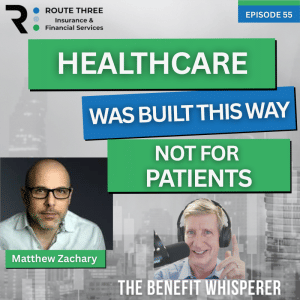
welcome everybody to another benefit whisper episode, a very exciting one I have with me. I'm privileged to have with me the one and only Matthew Zachary, who has written a book And it's a very, very important book.
Ralph Weber (
00:47)
because it's about what healthcare should be about, which is the patient. And it's, in my opinion, probably why most doctors are in healthcare, but why the industry treats the patient as a profit center. Matthew, welcome to the show. Glad to have you here today.
Matthew Zachary (
01:07)
It's an absolute pleasure, Ralph. Thank you for having me on the show.
Ralph Weber (
01:10)
Yeah, great. So tell me a little bit about your book, tell our listeners what what's the book about
Matthew Zachary (
01:16)
Well, the inside is that it's like a dark sardonic, genic comment about why American health care can never have nice things since 1910.
Ralph Weber (
01:22)
Mm-hmm.
Matthew Zachary (
01:23)
That's kind of where it started from.
Ralph Weber (
01:25)
Yeah.
Matthew Zachary (
01:26)
I just bring a lot of.
Matthew Zachary (
01:28)
sort of accidental pedigree. I happen to be a survivor. I happen to have gone through 30 years of crazy shit. I've worn every hat except I haven't
Ralph Weber (
01:36)
huh.
Matthew Zachary (
01:36)
worked in pharma. I'm not a lawyer. I've never passed a bill. Everything else, I've kind of done a version of that. And I've always been independent. So
Ralph Weber (
01:42)
wow,
Matthew Zachary (
01:45)
I just have a very indivisible world with ex of people I'm very proud of. I have trust.
Matthew Zachary (
01:51)
with millions of people, I can have an opinion. Many people can't. I could say what's in people's heads that they can't. I'm
Ralph Weber (
01:59)
Mm-hmm.
Matthew Zachary (
01:59)
not golden handcuffed or shackled anywhere. And I'm just brutally honest about where I feel there can be improvements, where there are inefficiencies. And from the perspective mostly,
Ralph Weber (
02:09)
Mm-hmm.
Matthew Zachary (
02:10)
of a patient who's been chewed up by the system, but also an entrepreneur, an investor, a startup guy, a nonprofit guy, a farmer guy, marketing guy, an on-the-com guy. And at some point during that pandemic, I realized that someone was like, you should write a book, but not a memoir. No one cares about that. It's like, well, if I'm
Ralph Weber (
02:27)
Right, right, yeah.
Matthew Zachary (
02:28)
gonna write an angry book, hmm, what the hell could I write about?
Ralph Weber (
02:31)
Right.
Matthew Zachary (
02:31)
But the overarching thing, and this really wasn't a thing that was necessary to be angry about 10 years ago,
Ralph Weber (
02:37)
Mm-hmm. Yeah.
Matthew Zachary (
02:38)
is just the ever encroaching malfeasance and abuse that the insurance, health insurance industry has wrought upon America. It has one of the highest bipartisan approval ratings of hatred. It's like
Ralph Weber (
02:50)
Mm-hmm. Yeah. Yeah.
Matthew Zachary (
02:52)
they hate it more than Congress. It's really, really bad.
Ralph Weber (
02:54)
Yes. Right.
Ralph Weber (
02:56)
Yes.
Matthew Zachary (
02:57)
Very few
Matthew Zachary (
02:57)
Americans, I mean some of them, mean you're happy with what you have if you don't need it. And that's not
Ralph Weber (
03:03)
Right.
Matthew Zachary (
03:04)
normally how it works. So
Ralph Weber (
03:06)
No, no, no.
Matthew Zachary (
03:08)
I wanted to write a book about progress first and foremost. The perspective that 30 years ago we just kind of died, were four chemo's, there was no laparoscopy and whatever it was. like we have different, better.
Matthew Zachary (
03:22)
and different worse problems today.
Ralph Weber (
03:25)
Yes. Yeah. Yeah.
Matthew Zachary (
03:27)
But the second part was basically that health insurance is now the gatekeeper of your death. this jargon of social deter...
Ralph Weber (
03:35)
Wow, that's an interesting way to put it, but you're right.
Matthew Zachary (
03:38)
Yeah, yes, this is the consumer patient perspective. that...
Ralph Weber (
03:41)
Mm-hmm.
Matthew Zachary (
03:44)
Forget our jargon about social determinants of health and no one gives a shit. Someone in Oklahoma
Ralph Weber (
03:48)
Right. Yeah.
Matthew Zachary (
03:49)
with cancer doesn't need to know that jargon. They just don't want to die and they
Ralph Weber (
03:52)
Right. Yeah.
Matthew Zachary (
03:53)
don't want their health insurance to be their doctor and tell them no. That's what this book is about. The evolution
Ralph Weber (
03:58)
Right.
Matthew Zachary (
04:01)
of how that happened and what it does to chew up the people inside it and what that means to American culture.
Ralph Weber (
04:07)
Right, right. Yeah, absolutely. And I recently did sort of a six episode mini series within the benefit whisper about the history of health insurance in America over the last hundred years starting in 1929 when the Baylor teachers plan formed the first ever prepaid healthcare plan, which later became Blue Cross. And back then
Matthew Zachary (
04:32)
Yes.
Ralph Weber (
04:33)
it had one goal.
Ralph Weber (
04:35)
And that was to solve an issue called liquidity. know,
Matthew Zachary (
04:38)
you
Ralph Weber (
04:38)
nobody was working. People were being bankrupted by hospital bills because they didn't have jobs. Hospitals were swimming in debt. So that was supposed to solve liquidity on both sides, the patient and the provider. Okay. So that's where it all started. And then many, many, many things happen after that, all of which remove the patient and the provider further and further apart.
Ralph Weber (
05:01)
removed that relationship, turned it into a V where at the bottom of the V is the payer. And then each side has sort of their own interests, which diverge more and more. And all the, you know, and I spoke to Mark Cuban about this, all the middlemen that have been added rent seekers into the equation. you know, it's amazing how much you and I are on the same page. You know, we could be brothers.
Matthew Zachary (
05:24)
Yeah.
Matthew Zachary (
05:24)
Yeah, like I said, it's like Lenny and Squiggy from Shirley and Laverne
Ralph Weber (
05:30)
Yeah.
Matthew Zachary (
05:31)
Lawrence. We just say the same thing from different sides. Like Louie and Jim from Taxi. I'm dating myself. We tick roughly the same census box, so we're going to get our references here. It's funny, if you go back even 25 years earlier than the Great Depression or the start of the Great Depression, I write in my book about how Teddy Roosevelt was the first president to try to get universal health care.
Matthew Zachary (
05:54)
It was the start
Ralph Weber (
05:54)
Mm-hmm.
Matthew Zachary (
05:54)
of why we can't have nice things because the railroad tycoons and the robber barons wanted their employees to be theirs. So they
Ralph Weber (
06:01)
Yes.
Matthew Zachary (
06:01)
bribed the American Medical Association. They ripped off the American Cancer Society, which was just getting started back then, and the AFL,
Ralph Weber (
06:08)
Mm-hmm.
Matthew Zachary (
06:08)
before the CIO, just took charge of employing it. So that's kind of where it started from just robber baron greed. And here we are 130 years later at this
Ralph Weber (
06:18)
Yeah.
Matthew Zachary (
06:18)
point, now 20 years later, and it's still robber baron greed.
Ralph Weber (
06:22)
Yeah Yes. Yeah, it sure is No question about that You know and the thing is I mean Matthew I think everybody agrees that there's nothing wrong with having a business and making a profit but Gouging and treating people like profit centers really Do you remember the movie network back in when was it late 60s? Yeah. Yeah.
Matthew Zachary (
06:45)
yeah, mad as hell not gonna take it anymore for sure.
Ralph Weber (
06:47)
Yeah, that's what
Ralph Weber (
06:49)
When I had the episode with Mark Cuban and Kevin Schulman from Stanford, we all said, I'm mad as hell. I'm not going to take it anymore. But really, that's where we're at. I just don't know what we would pick up to throw out the window. But everybody is mad as hell about health insurance. And I posed a question a while ago on LinkedIn. said, when we say health care, what does that mean?
Ralph Weber (
07:15)
You know you ask 10 different people and you'll get 10 different answers Health care means
Matthew Zachary (
07:19)
Right. Right.
Ralph Weber (
07:20)
I can get my annual physical health care means somebody will pay for my medical care health care means going to the doctor and getting a physical You know, it's different to everybody but at the end of the
Matthew Zachary (
07:30)
Yeah.
Ralph Weber (
07:31)
day the way I see it There are two different things medical care on the one side, which is doctors and hospitals providing medical care immunizations examinations surgeries
Ralph Weber (
07:43)
chemo's, radiations, et cetera, et And then on the other side, there's healthcare finance, which has very little to do with health or care. It's just really an opaque
Matthew Zachary (
07:52)
Yeah, right.
Ralph Weber (
07:54)
system that, and when you think of it, when you think of healthcare, the way we talk about healthcare today in this country, we think, it doesn't make sense. Why is it working like this? Well,
Ralph Weber (
08:06)
It doesn't make sense if you think that it's supposed to provide health or care. But if you think of what it has become, what it has morphed into, it makes perfect sense. You know, it's basically distressed finances
Matthew Zachary (
08:18)
I've heard it referred to as
Ralph Weber (
08:20)
with hospitals being the largest collection agencies in the country.
Matthew Zachary (
08:23)
Yeah, I've heard it referred to as profitable expenses.
Ralph Weber (
08:26)
Yes. Yeah. You know, so I did a little take on the Mattis Health thing, which I'll send you after, it's, you know, when he's Howard Beale says, I'm human being, God damn it, my life has value. mean, and that's it. And, you know, we have to say to the insurance companies, I'm not a profit center.
Ralph Weber (
08:53)
You know, my health has value. And that's what it boils down to is we are being used as pawns and the denial system. One of the things that I talk about a lot because everybody thinks, AI is going to be our savior. AI is going to speed things
Matthew Zachary (
09:06)
you
Ralph Weber (
09:07)
up. The problem is the system is so broken, all it's going to do is accelerate the mistakes. When I had Don Berwick on Friday,
Ralph Weber (
09:16)
We talked about that and he's in complete agreement with us as well. He's on the same side of the formula. And the thing is what AI, that black box, we talked about that black box, that opaque black box with the denial rules. And he said something very meaningful. Fiduciary duty. The question I posed is, is an employer
Ralph Weber (
09:42)
honoring or fulfilling their fiduciary duty if they cannot explain to one of their employees that participates in the health plan what the rules are for denial. And no, the answer is no, they're really not. this black box, this opaque black box, AI is just going to accelerate something that's screwed up, getting screwed faster. That's what I call it now.
Matthew Zachary (
10:05)
You're spot on, but on the receiving side of this, no employer wants to have unhappy employees, period.
Ralph Weber (
10:14)
No, exactly.
Matthew Zachary (
10:16)
But also, no employee wants to hope that their employer has decent healthcare insurance policies.
Matthew Zachary (
10:23)
And that alone is also the crap shoot no one asks for. I just want a job to pay my rent and not be miserable and do whatever I need to do to live this life. The last thing I'm read is the iTunes Terms of Service to make sure that it includes asthma inhalers and shit from my knee that doesn't work and God knows what, right? And you can't expect to explain that to the average American. No one understands
Ralph Weber (
10:49)
Mm-hmm.
Matthew Zachary (
10:49)
this, no one reads this, and I think that's
Matthew Zachary (
10:52)
one of my grievances, I mean among many, is that be your own advocate is bullshit. Be your own advocate is absolute and total automatic systemic failure personified. That you should even have to be your own advocate is the abject failure status. I like to poke the bear a little bit in case anyone hasn't noticed that. But
Ralph Weber (
11:15)
You
Matthew Zachary (
11:16)
there's two things here. I've heard doctors
Matthew Zachary (
11:18)
I'm part of a burnout documentary with Mark called Suck It Up Buttercup. It's basically this big
Ralph Weber (
11:25)
really?
Matthew Zachary (
11:26)
middle finger to private equity and rural health and UnitedHealthcare on how they basically
Ralph Weber (
11:28)
Mm hmm. Right.
Matthew Zachary (
11:31)
destroy Hippocrates.
Matthew Zachary (
11:34)
one of the doctors there doesn't say American Health Care isn't broken, he says it's fixed, just not for the patient. And I
Ralph Weber (
11:38)
Right. Yeah.
Matthew Zachary (
11:40)
say it's not broken, it was built this way, which is the same thing. And I just say that to stop people from saying broken, because anyway,
Ralph Weber (
11:49)
Yeah. Yeah.
Matthew Zachary (
11:51)
where my head goes on what you just articulated, goes back to something I write about in the book, something I've talked about for a while. mean,
Matthew Zachary (
11:59)
The allegories I've been on the air since 2007 with dial-up and those modem sounds.
Ralph Weber (
12:04)
Yeah.
Matthew Zachary (
12:05)
We've been doing patient advocacy and healthcare reform and whatever the hell innovation means
Ralph Weber (
12:10)
Right. Yeah.
Matthew Zachary (
12:12)
for 20 years and it's the same shit different day. You march a bald kid out to Capitol Hill, take some photos with a zygote staffer that has no idea what the fuck's going on that represents an octogenarian who should have been kicked out of Congress 40 years ago, and nothing ever happens.
Ralph Weber (
12:26)
Mm-hmm. Right.
Matthew Zachary (
12:28)
So I took
Ralph Weber (
12:28)
Right.
Matthew Zachary (
12:29)
a lot of cues of the 30 years I've happened to still be above the grass. I remember Larry Kramer in Act Up.
Matthew Zachary (
12:38)
I remember the march on Washington in 1998 with the National Coalition for Cancer Survivorship. I was incubated at Livestrong when we were just uniting around, this all sucks for all of us, before healthcare made it worse. And of course I launched a global movement of millions of Americans and international patients with stupid cancer. So organizing is something that I haven't seen happen.
Matthew Zachary (
13:03)
in America since 2012 with ACA. That was it. That was it. So my theorem now and my process now and where I wanna leave readers in the book, it's one thing to be pissed and say, go raise money for research. It won't matter if Etna says no. And I'm picking on Etna and Cigna and healthcare and the usual suspects. What needs to happen now,
Matthew Zachary (
13:28)
is there needs to be a citizen organizing against healthcare's harm. Going back to your point about how Hippocrates should include financial harm, mental harm, physical harm, and again,
Ralph Weber (
13:40)
Right. Yes.
Matthew Zachary (
13:42)
separating hospital errors from all that other natural way to think about harm. That's where I feel what's been missing.
Matthew Zachary (
13:49)
in this country is a unified, not a PAC and not a lobby group, a unified voter block of 50
Ralph Weber (
13:53)
Right. Yes.
Matthew Zachary (
13:56)
million Americans, which is insane potential, because everyone
Ralph Weber (
14:00)
Right.
Matthew Zachary (
14:01)
doesn't want, not to use double negatives, no one wants to go broke to have.
Matthew Zachary (
14:07)
you know, go fund me be your cure, to have
Ralph Weber (
14:09)
Yeah.
Matthew Zachary (
14:10)
your insurance tell your doctor to go, you know, fuck himself, and to be denied for no reason on purpose just to waste money and time to get approved later on. No one wants that.
Ralph Weber (
14:19)
No, you're absolutely right. Not only does nobody want that, nobody asked for it, nobody deserves it.
Matthew Zachary (
14:28)
No one voted for it.
Ralph Weber (
14:29)
Exactly. And when you think about the four main parties in the healthcare transaction, the patient, the employer, the provider and the payer, and then the hundreds of middlemen that are all in between the stuff that are
Matthew Zachary (
14:46)
Mm-hmm.
Ralph Weber (
14:47)
simply the plump.
Ralph Weber (
14:48)
the ponds. You know, at the end of the day, given the system that we have, which is primarily employer based other than Medicare, Medicaid, it has to be affordable for both sides. Now, the part that goes missing, and we've talked about this a lot, the administrative waste is $1.7 trillion a year. I shouldn't say that's
Matthew Zachary (
15:08)
Yep.
Ralph Weber (
15:09)
the administrative waste. That's the administrative portion of the total bill. So about 34
Matthew Zachary (
15:12)
Yeah, yeah, but there's a lot of wasted
Matthew Zachary (
15:14)
there.
Ralph Weber (
15:15)
yeah, yeah,
Ralph Weber (
15:15)
yeah, there's a lot of tons of waste. But to administer healthcare payment, it goes through 43 steps. The life of a bill is 43 steps from the hospital to when it gets paid, which is ridiculous. Every other industry, Matthew, you go to a restaurant, you eat the meal, you see the prices on the menu before you pick, and then you pay before you leave.
Ralph Weber (
15:41)
You book a flight, you pay when you book it, you book a theater ticket. Everything is the payment and the service is linked directly
Matthew Zachary (
15:52)
Yep.
Ralph Weber (
15:52)
or shortly before or after, except in healthcare. And if you think of the day service outstanding, sorry, day sales outstanding, the amount of time that it takes and the erosion, it is similar in healthcare.
Ralph Weber (
16:07)
That you know, it's distressed finance. It's like construction litigation Bankruptcies the delay of service and the erosion
Matthew Zachary (
16:13)
Mm-hmm. Yeah.
Ralph Weber (
16:15)
So what the hospitals end up doing this is you know, the theory that i'm talking about in the paper that i'm writing my theory is that the hospitals know that they're not going to get what they're supposed to get and Because of that they build in this uncertainty premium. Okay, so
Ralph Weber (
16:33)
Part of the hospital bill, part of what they negotiate includes the fact that there are going to be denials, there are going to be uncollectible balances, are going to be patient write-offs, et cetera, et cetera. So that's one of the things that boots it up. And it doesn't have to be that way. It really doesn't.
Matthew Zachary (
16:53)
Well, the other side of that also is the malfeasance of the payers themselves. In their annual budgets is a billion dollars of legal fees, right? Like they just plan to be sued and,
Ralph Weber (
16:59)
Mm-hmm. Yeah.
Matthew Zachary (
17:03)
know, and, you know, to Mark's point, or maybe a little skewed to Mark's point, they're unshamable and Mark is just trying to shame them and it's
Ralph Weber (
17:10)
Yes. Yep.
Matthew Zachary (
17:12)
never going to work. I appreciate what he's done for Cost Plus. I want to be Cost Plus spokesperson. take I'm on seven meds for the rest of my life, right? Seven
Ralph Weber (
17:20)
Mm-hmm.
Matthew Zachary (
17:21)
meds that I mean, never look under the
Matthew Zachary (
17:23)
hood this is fine. Exterior right Doc.
Matthew Zachary (
17:27)
Of those seven meds, Fiber Generic and two of are, I can't go off brand. But I moved those five to Cost Plus and I'm saving, my household is saving three hundred bucks for 90 day supply every three months. We just don't spend three hundred bucks and we're just paying cash for, and I fired my copay because of what Mark brought to market. It's phenomenal. Everyone understands this, it's bullshit, there's middlemen, know, lay people get that part. Why is it cheaper if I go to Mexico or Europe? We get that part.
Matthew Zachary (
17:55)
But what's missing is that you can't shame them. How do you hit them in the wallet is the
Ralph Weber (
18:03)
Mm-hmm.
Matthew Zachary (
18:03)
other part that no one's really exploring. What is the economic benefit of eliminating this middleman? And I talk in my book, and this is a stat news like golden rule, golden data, amongst all of your known waste and fraud.
Matthew Zachary (
18:24)
This $30 billion a year wasted every year because of intentional denials that wind up costing more money to fix. So this $10 billion lost in denials that should not have been denied, that's thing of AI ruining everything. And then it takes 20 billion to fix those 10 billion. So 30 billion in waste divided by the states, by ecology, divided by states, states are losing, Medicare's losing, employers are losing, hospitals are losing, billions a year. So this is my second theory.
Matthew Zachary (
18:53)
I'd love your thoughts on this, it is in the book. And I hate making up terms to make them sound like they're a late person, but healthcare and harm reduction really kind of go hand in hand with infrastructure. Safe roads, safe tunnels, safe schools, safe houses, safe this. What is safe, protected healthcare?
Matthew Zachary (
19:16)
for the average constituent. And for me, the harm reduction or consumer protection, I'm going the Liz Warren route,
Ralph Weber (
19:22)
Sure. Yep.
Matthew Zachary (
19:22)
can there be a consumer protection law that exists that bans delay, deny more than 14 days, that forces arbitration that the states already know how to get you out of trouble, that
Ralph Weber (
19:36)
Right.
Matthew Zachary (
19:36)
basically do oncology debt write-offs, so if you can abet, is that the word?
Matthew Zachary (
19:42)
or abate or build an upstream where the $10 billion just never happens in the first place?
Ralph Weber (
19:50)
Right? Yeah.
Matthew Zachary (
19:51)
Think about the Ralph Nader, seat belts are better, safer, cheaper. Maybe healthcare can be better, safer, cheaper by building an upstream. And that reduces burnout, that reduces hours of paperwork, and then there's
Ralph Weber (
20:04)
Right.
Matthew Zachary (
20:04)
just so much, I hate the fact that we even have.
Matthew Zachary (
20:08)
to do this in this country, but if that's a path to getting rid of a $30 billion spend that doesn't need to happen, that's on purpose, then you hit them on the wallet.
Ralph Weber (
20:20)
Right, no exactly. Are you familiar with the Himmelstein-Woolhandler graph, growth of administrators versus physicians? Do you know the graph, the stat?
Matthew Zachary (
20:32)
I'm not, but I'm probably
Matthew Zachary (
20:34)
going to be very angered by your telling me about it.
Ralph Weber (
20:37)
It
Ralph Weber (
20:37)
talks about and I forget the exact period. I think it's like from 1970 till today. It might be tighter. It probably is tighter than that. Of course, the HMO Act passed in 73. So it is tighter than that. But anyway, during this defined period of time, growth of doctors grew by 250 % while the growth of administrators was 4,800%.
Matthew Zachary (
21:00)
I saw that. It's like $7 trillion over the last 20 years. Like, show out about a nowhere. Yeah.
Ralph Weber (
21:02)
Yeah, No,
Ralph Weber (
21:06)
exactly. And then on top of it, the doctors themselves have to justify to the payers all that they're doing. And that leads to burnout too. When a doctor becomes accountable to the payer, they should be accountable to the patient that they're treating.
Ralph Weber (
21:29)
you know, not to the TPA that just administers the healthcare payment. I mean, that's, you know, talking about bullshit, that's total bullshit.
Matthew Zachary (
21:37)
Yeah.
Ralph Weber (
21:38)
You know, but on top of it, you know, and I kind of lost my train of thought because I got off on this tangent. But you know, the big thing is about all of these payments and all of these steps that I talked about that a hospital bill has to go through.
Ralph Weber (
21:57)
and the number of administrators, it's really just a system to make money for the payers. as Mark said, and Don said this too, billions, tens of billions, hundreds of billions, maybe even trillions that's sitting in the system, even a one or two day delay will make a ton of money on the float. So that's
Matthew Zachary (
22:19)
Mm-hmm, yeah.
Ralph Weber (
22:21)
just...
Ralph Weber (
22:21)
one of the profit models that the payers are using.
Matthew Zachary (
22:24)
Well, Mark is very good about the economics of inefficiency. That is not my lane. That's his Venn diagram. I'm not a billionaire that used to own a baseball team. He's basketball, I didn't know. Some sports team, whatever it was.
Ralph Weber (
22:38)
Yeah. Right.
Matthew Zachary (
22:41)
But then, where are the financial incentives to fix the inefficiencies? Who makes the most? I've been op ed coming out on BBC pretty soon called, Who Profits When Patients Win?
Matthew Zachary (
22:53)
And yeah, if we're thinking of protections, states win, employers win when there's no downstream of waste, but
Ralph Weber (
22:59)
Right.
Matthew Zachary (
22:59)
who, fully pro-capitalist, this is not like in my Wall Street, I can still save profits over patients without saying you can make all the money you want. In fact, my closing remark in the documentary with Mark was make all the fucking money you want, try to kill us a little less, maybe not all the money you want, but you can harm us less and still make your profits.
Ralph Weber (
23:16)
Yeah, yeah, yeah, absolutely. My financial model, what I've done is, and I've done a ton of research over the years, and what I've put together has to do, it wraps the RAND study and all this prior research, and it puts them all together, and it talks about the erosion. So the average hospital gets paid roughly 67 %
Ralph Weber (
23:41)
of what they're supposed to get paid because of the erosion. So
Matthew Zachary (
23:44)
Mm-hmm. Yeah.
Ralph Weber (
23:47)
I'm working on a break even scenario where number one, if all of these steps weren't needed, this prior auth, et cetera, how much could they get away with? And I just remembered what I was going to talk about because you asked me about the prior auth. We were talking on
Matthew Zachary (
24:03)
Yeah.
Ralph Weber (
24:04)
Friday about Medicare Advantage, the prior auth.
Matthew Zachary (
24:07)
which again is
Matthew Zachary (
24:08)
Medicare disadvantage.
Ralph Weber (
24:09)
Medicare disadvantage. Exactly. So in
Ralph Weber (
24:12)
Medicare disadvantage, and I'm trying to remember off of the top of my head the statistics, 7.1 million claims that were denied were appealed. 88 % of denials were not appealed, but those that were appealed, 80 % of were overturned.
Matthew Zachary (
24:33)
Yes.
Ralph Weber (
24:33)
In other
Ralph Weber (
24:33)
words, they were appealed for the wrong reasons. They shouldn't have been appealed. So these 80 % of 7 million people or denials wasted all this money appealing something that should have never been appealed in the first place.
Matthew Zachary (
24:46)
That's the $30 billion, that's exactly it. And it's worse in oncology. Let me give you our stats. In the vertical
Ralph Weber (
24:51)
Mm-hmm.
Matthew Zachary (
24:51)
of oncology alone, it's probably 80 % of the denials that are appealed are approved in oncology.
Ralph Weber (
24:57)
Right. Yep.
Matthew Zachary (
24:58)
But guess what percentage of denials are not appealed at all in oncology?
Ralph Weber (
25:04)
On Medicare Advantage, it was 88 % overall. So I'm guessing it's somewhere around there. I'm going to guess 80%.
Matthew Zachary (
25:11)
Alright, .02 % of denials and oncology are appealed. .02%. But of those .02%, yes,
Ralph Weber (
25:16)
Wow, so 99.8, wow.
Matthew Zachary (
25:20)
yes, that's oncology. Of those .02, 80 % of those are approved.
Ralph Weber (
25:26)
Wow. And that's 30 billion.
Matthew Zachary (
25:28)
I mean, the 30 billion is across the board nationwide per annum.
Ralph Weber (
25:31)
Gotcha, gotcha.
Matthew Zachary (
25:32)
And that's a 2024 stat from stat. I'm sure it's way worse now with
Ralph Weber (
25:35)
Yep. Yep.
Matthew Zachary (
25:36)
just the lack of regulations and the complete depletion of any responsibility whatsoever. Even after they murdered Brian Thompson and they tried to kill the ethnic guy, like we're at a
Ralph Weber (
25:48)
Mm-hmm.
Matthew Zachary (
25:48)
point now where we're going like Che Guevara here. And that's, if that isn't a sign that this country is in pain.
Ralph Weber (
25:55)
Yes.
Matthew Zachary (
25:55)
I don't know what it's gonna take. wait, can you hold for one second?
Ralph Weber (
25:57)
Yeah, I mean every 58 seconds. Yes.
Matthew Zachary (
26:01)
My doorbell just rang, one second. I'm glad this is pre-taped. Give me a sec, hang on.
Ralph Weber (
26:03)
Sure. Okay, yep.
Matthew Zachary (
26:06)
When you're the only guy here.
Matthew Zachary (
26:08)
Sorry, the advantage, disadvantage of being a solo act. All right. Sorry.
Ralph Weber (
26:13)
Yeah, no worries.
Matthew Zachary (
26:15)
All right, let me get this back where it was.
Matthew Zachary (
26:17)
Oh, we just talked about how that 30 billion, the redonkulous micro percentage in oncology specifically, but that 30 billion is across the board. And it really is, that's from 2024. So I'm sure it's much worse now with the depletion
Ralph Weber (
26:34)
Right. yeah. Yeah.
Matthew Zachary (
26:38)
of morals in the health insurance industry.
Ralph Weber (
26:39)
Right, right.
Ralph Weber (
26:40)
You know, and with AI, Matthew, I think that AI could do some good things in healthcare, but right now the way people are planning to use it, I don't think it's good because it just means you're getting screwed quicker, really. know,
Matthew Zachary (
26:57)
Yeah, yes.
Ralph Weber (
26:59)
it speeds up the fuck ups, you know, that's all it does. And you're gonna have on the provider side,
Ralph Weber (
27:05)
More AI based denials on the provider side, more AI based appeals, and they're going to be AI against AI. if you and I decided to have an argument by email and we're both using AI, each of our AI models would
Matthew Zachary (
27:22)
Yes. Yeah.
Ralph Weber (
27:25)
adapt to that argument and each of them would say that we're right. So that's what you're going to have is this crazy thing. It's kind of like
Ralph Weber (
27:32)
It's kind of, this might be before your time, but it kind of reminds me of driving a Ford Pinto with a full tank of gas with a jet engine strapped on the roof. You know, you're just one pothole away from, you know,
Matthew Zachary (
27:43)
Right, that blows up by hitting a hydrant.
Ralph Weber (
27:47)
the thing blowing up.
Matthew Zachary (
27:48)
Yep, Gremlin, the Pacer, and what was the third one? Gremlin, the Pacer,
Ralph Weber (
27:52)
Gremlin.
Matthew Zachary (
27:53)
and the Pinto. All three of them, which is Death Traps. Yeah.
Ralph Weber (
27:54)
And the Pinto, yeah, yeah, yeah. And
Ralph Weber (
27:56)
Firestone 500 tires, those two. Yeah,
Matthew Zachary (
27:58)
Yeah.
Ralph Weber (
28:02)
but I mean, that's where we're headed. And it's scary. It really is scary. You know, and my background is as an air traffic controller. And what I am trained to do is because air traffic control has a zero tolerance for air, zero tolerance. Okay, make a mistake.
Ralph Weber (
28:21)
People die, boom. And not just one person. A thousand people can die if you make one mistake. So sometimes I have to jump into chaos, look from the top down, figure out what the hell's going on, and straighten it out and get people flowing in the right direction again. But there's so many pieces, so many diverging and distances.
Ralph Weber (
28:47)
airspeeds, climb speeds, visibility. There are so many dimensions that figure into it. And in healthcare, it's the same thing. So, you know, if you look from the top down, as I often do, you can see a lot of the pieces that are by design, you know, divergent needs, not even needs, divergent...
Ralph Weber (
29:13)
What's the word I'm looking for? Interests, divergent interests.
Matthew Zachary (
29:16)
Yeah. Yeah, but you
Matthew Zachary (
29:19)
would agree though that air traffic control would totally benefit from two AIs angering with each other because they're both out for patient safety because if there's no patient safety, there's harm, there's loss of insurance. You know, there's
Ralph Weber (
29:30)
Right. Yes.
Matthew Zachary (
29:32)
accountability in the consumer world. I, you
Ralph Weber (
29:34)
Mm-hmm, yes.
Matthew Zachary (
29:35)
know, I cut my teeth at Omnicon for 10 years in the 90s. I learned a lot about how to manipulate people and working consumers and sell Doritos and all that crap. When there's a demand market.
Matthew Zachary (
29:44)
They know that they could tank like the Pinto by making something terrible, right?
Ralph Weber (
29:49)
Yeah, yes.
Matthew Zachary (
29:50)
To Ralph Nader's point and the Corvair and shaming GM, it worked. No one wanted to
Ralph Weber (
29:54)
Yeah.
Matthew Zachary (
29:56)
buy cars that would kill you. They wanted to buy the cars with the seat belts. They were looking for
Ralph Weber (
29:59)
Right, right.
Matthew Zachary (
30:00)
safety because they built a demand market. Healthcare, outside of break, fix, and annual visits, normal shit, that's okay. But there's no
Ralph Weber (
30:06)
Mm-hmm. Yep.
Matthew Zachary (
30:08)
demand market for oncology care. There's no demand market for GLPY. Now there is.
Matthew Zachary (
30:13)
demand market for your kid having asthma and eczema. And that's where the malfeasance is because you're not expected to know what to do. They completely build a business model around that ignorance.
Ralph Weber (
30:25)
Right, right. Yes, they well they they build a business model to take advantage of the ignorance The opacity
Matthew Zachary (
30:32)
Yes. Yes.
Ralph Weber (
30:34)
is the revenue generator. It's the business model. It becomes that business the confusion the opacity That's what drives the profit And and they're
Matthew Zachary (
30:43)
Yeah.
Ralph Weber (
30:43)
using it. It's engineered to do that
Matthew Zachary (
30:45)
Yeah, built this way. We agree on the same thing. Exactly.
Ralph Weber (
30:47)
Yeah, yeah, yeah.
Matthew Zachary (
30:48)
So then, so the what if, the Dale Carnegie just oppose moments that I talk about whenever I go anywhere.
Ralph Weber (
30:51)
huh.
Matthew Zachary (
30:54)
What happens when that 0.02 % becomes 5 %? What happens when?
Matthew Zachary (
31:01)
more than 50 % of cancer patients are given the tools to avoid the downstream fuckery. What happens when 50 million Americans organize a nonviolent bipartisan voter block demanding in our states harm reduction from financial toxicity? What happens when all that wasted money goes back to the people it belongs to, the systems it belongs to, Medicare advantages, robbing the government left and right as like the worst offender
Matthew Zachary (
31:29)
of where, I mean, forget all the other crap they're wasting money on, but you look at how much abuse there is at the behest, right, of corporate interests and shareholders and at the expense
Ralph Weber (
31:40)
Right.
Matthew Zachary (
31:41)
of the American voter.
Ralph Weber (
31:41)
Yeah, exactly. And all of those shareholders, whether it's a teacher's pension plan or an individual investor, they're cheering when their money grows. If they knew that, that meant that somebody was denied necessary treatment, how would they think?
Ralph Weber (
32:03)
And how can we connect those two more tightly so that they are, because they are connected, but how can we make people see that, Matthew? That's my question. That's only part of it, but yeah.
Matthew Zachary (
32:12)
Yeah, again, it's money and power. It's the
Matthew Zachary (
32:16)
transfer to Mark's point again, it's the transfer of money and power. Who makes the most money when the incentives work in favor of the voter? Period. It's that straightforward. And I'm
Ralph Weber (
32:24)
Yeah.
Matthew Zachary (
32:25)
not saying this is any kind of pundit. It's just the natural law of sort of socioeconomic anthropology. They use lots of syllables right there. People are incentivized to vote in single interest strategies. What unites people aren't gun rights and abortion and all this crap.
Matthew Zachary (
32:42)
and redistricting, that's complicated stuff. You wanna be able to walk into some place you didn't wanna be in before and just not get screwed, period. And how
Ralph Weber (
32:50)
Yeah. Yeah.
Matthew Zachary (
32:51)
can you be protected from that by being part of a block that demands it? That's what I'm suppositioning in my book.
Ralph Weber (
32:58)
Yeah, well, and that's great. I had the privilege of sort of doing a pre-read, which I really appreciate. But, you know, I want to autograph a copy. I'm going to order one. When can I order?
Matthew Zachary (
33:10)
I mean, you could order it today, it'll be delivered to Amazon Prime,
Matthew Zachary (
33:13)
I've been in pre-sales mode since December, the book's done so well, we're on our second printing. Pre-orders are through the roof
Ralph Weber (
33:23)
Wow, wow, that is amazing.
Matthew Zachary (
33:25)
and.
Matthew Zachary (
33:26)
I was just told by my publisher, I wouldn't know this, first time author, no one gets to their second publishing before their pub date.
Ralph Weber (
33:36)
Right, right. Yeah, that is amazing. And that just shows you how needed it is. And we both know this. And I'm glad that you're out there talking about it. Like when I was reading it, I was thinking, wait, did I write this? Somebody took my thoughts and put
Matthew Zachary (
33:56)
Yeah.
Ralph Weber (
33:56)
them on pages because this is a lot of things that not as eloquently as you, but these are a lot of things that I speak about.
Ralph Weber (
34:04)
My wife is a physician, you know, and so we are on the same page in terms of the patient comes first, not the dollar, okay?
Matthew Zachary (
34:13)
Right.
Ralph Weber (
34:14)
And not the profit of the payer. It's really that simple. I mean, in my mind, I tend to think that this whole thing is really simple. It's not easy, but it's really simple to fix. We just need that, and if we get
Ralph Weber (
34:29)
50 million people, I think that will drive it. And the employers need to get involved too. To Mark's point, and I've worked on a, I've got a tool called the denominator audit where CEOs often think, okay, now we know that Starbucks spends more on healthcare than they do on coffee beans. And that is number one, that should be a startling statistic to start with.
Ralph Weber (
34:57)
But when a
Matthew Zachary (
34:57)
Mm-hmm.
Ralph Weber (
34:58)
large company thinks that, know, maybe there's, you know, depending on the industry and a thousand variables, they could be spending anywhere between one and 30 % of their total top line sales on healthcare. And if they're in the low single digits, one, two, three, four, 5%, they think, okay, if I save 30 % on my healthcare spend,
Ralph Weber (
35:24)
That's only a third of a percent. For example, it's not worth thinking about. However, what I've done is I've said, that's the wrong question to ask. Here's the right question that an employer needs to be asking. An employer needs to say, what percentage is this of my after-tax profit? And then to take it one step further, what effect would
Ralph Weber (
35:49)
Saving this money have on my company's enterprise value Because once companies whether they're public or private start thinking like that Then they're gonna pay more attention Once they start paying more attention and that you know again, you're solving the part for the patient I'm concerned about that too. I'm solving for that. I'm working on something that's gonna have a very very low if not zero
Ralph Weber (
36:14)
responsibility by the patient. Certainly the responsibility for collecting the money should be the planned sponsor in my opinion, not the provider. Okay.
Matthew Zachary (
36:22)
Mm-hmm. Right.
Ralph Weber (
36:23)
So if I solve for the other side, which is let's get the companies, the CEOs, the CFOs more involved. Let's get them pushing for change because they are hosting the payment mechanism by providing
Ralph Weber (
36:39)
creating an employee welfare arrangement, then we're going to get the push from two sides, the employer and the employer patient. And I think that that would give even more momentum.
Matthew Zachary (
36:51)
Yeah, and my question to that part of the resort, so to speak, is how can a multi-million voter block help you do that, and how do you help us do this?
Ralph Weber (
37:03)
yeah. Yes.
Ralph Weber (
37:05)
Yep. Yep. Absolutely. that is, wow. I mean, that's something that you and I need to put our heads together on and figure out how to
Matthew Zachary (
37:15)
Mm-hmm.
Ralph Weber (
37:16)
do. I know it can. There's no question because,
Matthew Zachary (
37:18)
Yeah.
Ralph Weber (
37:19)
know, it's like, who is the customer in the transaction? Okay. Is it the patient? Is it the employer? The insurance companies like to think it's them.
Matthew Zachary (
37:28)
It's the prescriber.
Matthew Zachary (
37:29)
It's the prescriber. It's, you know, we're gonna let you, Doc, give this patient this medicine. Patients are the end recipient of a, we are the receipt, basically, after the cash register goes ding ding. And we're stuck with whatever the receipt's gonna say on it. It's a store you don't expect to go shopping in. Like you said, there's no Groupon for chemo.
Ralph Weber (
37:53)
Yeah, yeah, no, no
Ralph Weber (
37:55)
exactly and you know, the other thing Matthew is there's no price in healthcare Okay, when you go to restaurant you look at the menu you see the price I mean other than maybe adding a tip maybe adding taxes, you know service fees, whatever The price is the price But in healthcare there really is no price. Imagine if you ordered something from amazon You found out three months after you ordered it
Ralph Weber (
38:19)
how much it cost, and only after going through five intermediaries and getting all kinds of confusing information.
Matthew Zachary (
38:24)
Yeah, right, exactly.
Ralph Weber (
38:26)
You know, that's what it's like. And that's crazy. I mean, that's screwed up. That's messed up.
Matthew Zachary (
38:30)
Yeah.
Matthew Zachary (
38:32)
Like I said, we were only gonna agree on things. I do wanna
Ralph Weber (
38:35)
Yeah. Yeah.
Matthew Zachary (
38:36)
point out one, I guess I ended my book on a happy note. I wanted to prove
Ralph Weber (
38:40)
Okay.
Matthew Zachary (
38:41)
that it can work when it knows it can, and it chooses
Ralph Weber (
38:45)
Yes.
Matthew Zachary (
38:47)
not to with malfeasance and intention. I went through a brain cancer scare. It wasn't, I'm fine.
Ralph Weber (
38:53)
I'm sorry, yeah.
Matthew Zachary (
38:54)
But I developed double vision out of nowhere, and needed glasses, and my pupil dilated, and all this crazy stuff.
Matthew Zachary (
39:02)
I'm on my wife's employer plan, which is actually surprisingly decent. Again, you shouldn't have to happen to work for someone who happens to have, there's so many ifs in that algorithm, in that permutation,
Ralph Weber (
39:12)
Yes. Yeah. Yeah.
Matthew Zachary (
39:14)
but she happens to work in an employer that happens to have a decent policy and they take care of their employees. And I spent a year basically trying to debug what was wrong with me to figure things out. Turns out I had like a mild third nerve palsy and they fixed it, but I spent a year, no,
Matthew Zachary (
39:29)
No surprise billing, no wait times, everything was pre-authorized,
Ralph Weber (
39:34)
Mm-hmm.
Matthew Zachary (
39:35)
no extra costs, no oops, nothing. Of course, like eight doctors and two health systems and dozens of tests and scans and surgery, we were out of pocket maybe 800 bucks the whole time. So
Ralph Weber (
39:47)
Wow.
Matthew Zachary (
39:48)
it is possible, that's my whole point, it is
Ralph Weber (
39:49)
Mm-hmm. Yeah.
Matthew Zachary (
39:51)
possible that it can work and it does work.
Matthew Zachary (
39:55)
And I had to end the book on that very point. It's not all terrible when people still know they can make a profit,
Ralph Weber (
40:03)
Yes.
Matthew Zachary (
40:04)
but on your side, there's still tons of stress when you have to spend your time telling the insurance company's doctor that you know better than them. And that goes back to where we started from, which is health insurance is now the new barrier to death.
Ralph Weber (
40:22)
Yeah, yeah, no it is it is it you know It is sad Matthew that we have to rely on the employer system, but that's what we have for now Okay,
Matthew Zachary (
40:33)
Yeah.
Ralph Weber (
40:34)
so let's fix what we have and and I agree it can be done. It can be done profitably Okay, it
Matthew Zachary (
40:41)
Yes.
Ralph Weber (
40:42)
can be done and and ai can help
Ralph Weber (
40:45)
But the way that people are applying it now, I think it'll do the opposite. I think it'll just speed up the spending and the chaos. exactly,
Matthew Zachary (
40:54)
Yes, it will, and they'll be arguing with each other.
Ralph Weber (
40:58)
exactly. So, wow, this has been a great conversation. We're coming up to the end. If people wanna buy your book, become involved, be part of the movement, how do they find you? How do they
Matthew Zachary (
41:08)
Here we go.
Ralph Weber (
41:10)
get involved? We, the patients.
Matthew Zachary (
41:11)
I have the fortune,
Matthew Zachary (
41:12)
We the Patients, Understanding, Navigating, and Surviving America's Healthcare Nightmare on sale now wherever books are sold. But I have the privilege of being on the internet so damn long that I'm the only Matthew Zachary. So it's not
Ralph Weber (
41:24)
okay.
Matthew Zachary (
41:25)
that complicated to find me if you just type my name anywhere into AI and anything, you'll find me, you'll find the book. It's the only We the Patients book on Amazon that I'm aware of. And I'm here to help, I'm alive.
Matthew Zachary (
41:38)
somehow and if you can get Mark to read it I'll buy you dinner.
Ralph Weber (
41:42)
wow. Okay. That sounds good. That's a you
Matthew Zachary (
41:43)
Ha ha ha.
Ralph Weber (
41:44)
know, let's talk about that for one second by you dinner. Okay, because I'm getting into Milton Friedman here, you know, kind of
Matthew Zachary (
41:52)
okay.
Ralph Weber (
41:52)
Milton Friedman meets Marty Feldman. Okay. Now, if if
Matthew Zachary (
41:57)
Now I'm in my young Frankenstein land. Great. Fantastic.
Ralph Weber (
42:02)
what was it that Mel Brooks said, you know, in the in the part history of the world part one about
Ralph Weber (
42:08)
the rich people, you know, what about the poor? When he was in the Senate, right? Yeah, yeah.
Matthew Zachary (
42:10)
It was good to be the king. fuck the poor. Fuck the poor.
Ralph Weber (
42:17)
So, you know, it's interesting because if I say, hey, listen, I appreciate you being on my show, I wanna buy you lunch, I can't make it up there, and you say, hey, great, and you're thinking Ruth Chris Steakhouse, you're thinking steak and lobster, and I'm thinking Wendy's, right? Okay, but when
Matthew Zachary (
42:33)
Hahaha!
Ralph Weber (
42:34)
you get...
Ralph Weber (
42:35)
When you get a hundred people all chipping in then all of a sudden nobody starts thinking of how they can game the system or how they can pay less Okay, and
Matthew Zachary (
42:44)
Right, right.
Ralph Weber (
42:44)
that's part of the problem is that we don't see it Okay So one of one of many things Yeah The exactly
Matthew Zachary (
42:48)
Thank you. But at least we know the prices.
Ralph Weber (
42:55)
we need need prices. wow, i'm just going on here but Monroney
Ralph Weber (
43:02)
Senator Mike Monroney. Have you ever heard that name?
Matthew Zachary (
43:05)
I am not.
Ralph Weber (
43:05)
He was a senator in Oklahoma state senator, I believe in 1955 and He passed a bill called the and the to this day the stickers are called Monroney stickers by people in the automotive industry Because at that time you can go from one dealership to another and have completely different prices in the same town Okay, just like hospitals do now
Ralph Weber (
43:29)
So what we call, what a lot of people call the MSRP stickers means if you buy a Toyota Corolla at this dealer versus that dealer, the same MSRP sticker's gonna be on there. It's gonna say how much
Matthew Zachary (
43:43)
Mm-hmm.
Ralph Weber (
43:43)
was the car, how much was the power steering, how much were the tire, et cetera, okay? So the Mulroney sticker, and I've been saying this for a long time.
Ralph Weber (
43:54)
This is another thing we need in healthcare is a Monroney sticker where it lists all the.
Matthew Zachary (
43:59)
That is a consumer protection.
Ralph Weber (
44:01)
Yes, it is, it is. Yep.
Matthew Zachary (
44:02)
Going back to the other thing we talked about, consumer
Matthew Zachary (
44:05)
protection. How do you ensure the safety, in my case, of the oncology patient who isn't told no gets worse and costs more and dies?
Ralph Weber (
44:15)
Right. Yes.
Matthew Zachary (
44:16)
Safety, safety.
Ralph Weber (
44:17)
Absolutely, absolutely. Well, great having you on. We're gonna have to do this again, Matthew, for sure. This has been a great episode
Matthew Zachary (
44:24)
I love it. Yes.
Ralph Weber (
44:25)
and I appreciate all you're doing for patients.
Matthew Zachary (
44:28)
Likewise, thank you so much for having me. It's a privilege to follow Mark on your show. If you can get him to write me back one of these days, I'd appreciate it.
Ralph Weber (
44:37)
Sure.
Ralph Weber (
44:39)
I'll see what I can do. He's amazing. He's doing
Matthew Zachary (
44:42)
No,
Ralph Weber (
44:43)
a lot of good things.
Matthew Zachary (
44:43)
he's a lot of... He needs a patient photo block. We can make that happen.
Ralph Weber (
44:47)
Yep, yep, sounds good. Thanks, Matthew.
Matthew Zachary (
44:50)
I appreciate it. Take care of yourself.