Unpacking Healthcare Bureaucracy: Transparency, AI, and Systemic Complexity
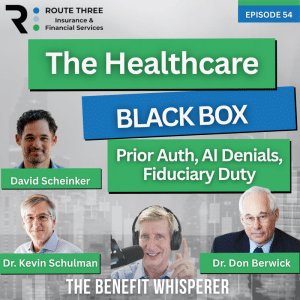
This episode features Ralph Weber discussing the opacity and systemic challenges of healthcare administration, particularly around prior authorizations and insurance practices, with insights from esteemed guests Don Berwick, Kevin Schulman, and David Scheinker. The conversation explores how technology and standardization could improve transparency, reduce costs, and enhance patient care.
Main Topics:
The black box of healthcare decision-making and the need for transparency
How AI and digitization may accelerate issues rather than solve them
The fragmentation and complexity of insurance contracts and prior authorization rules
Potential system-wide reforms, including standardization and digital contracts
The economic incentives that drive profit at the expense of patient care
In this episode:
Ralph Weber questions whether faster digital prior authorizations truly improve transparency
Don Berwick highlights systemic opacity and its moral implications
Kevin Schulman compares medical practices to banking, advocating for standardization
David Scheinker discusses the variability across insurance firms and potential AI solutions
Guests debate policy ideas like unified prior authorization processes and simple, trustworthy review agencies
Timestamps:
00:00 - The hidden complexity of healthcare payments and AI's role
00:35 - Digitizing black boxes: does it fix transparency?
01:02 - Introducing expert guests and the purpose of the discussion
02:17 - The moral failure at the core of opaque healthcare systems
02:40 - Origins of prior authorization and its benign beginnings
03:09 - Overuse, underuse, and the role of habits in medical decision-making
03:36 - Financial incentives corrupting clinical decisions
04:00 - The shift from benign to profit-driven denial practices
05:07 - The problem with insurance denials and delays as profit tools
06:00 - Stat on overturned denials and ongoing fractures in care
06:43 - Variability in insurance rules and their impact
07:52 - The chaos of inconsistent prior authorization criteria
08:52 - Accelerating harm through AI in opaque systems
09:01 - The failure of transparency and the risks of AI acceleration
09:28 - Variability in insurance practices and the need for digital contracts
10:26 - Moving from analog to digital adjudication
11:24 - Detecting egregious overuse and variation in care
12:15 - Applying learning systems to improve practice patterns
12:42 - The systemic design of contracts that promote opacity and profit
13:07 - The disparity in prior auth requirements among insurers
14:15 - How standardization in mortgage lending can inspire healthcare reform
16:18 - Fragmentation in insurance plans complicates patient choice
16:54 - The complexity added by multiple plan options and contract variability
18:20 - The Hawthorne effect in prior authorization and care decisions
19:07 - The economic incentives shaping the current system
20:18 - How administrative burdens and costs affect access and affordability
21:08 - The influence of insurer policies on healthcare costs and access
22:43 - The importance of comparing and standardizing insurance plans
23:01 - Employer functions, fiduciary duties, and systemic transparency
24:16 - Why employers should demand better clarity on prior authorization
25:40 - The demotion of clinical thinking in insurance leadership
28:09 - Learning from variation: improving guidelines through AI
29:05 - Contracts as opaque systems enabling profit motives
30:50 - The scope of procedures needing prior authorization and variability
32:18 - The potential for third-party, no-incentive review agencies
33:22 - How Medicare could simplify prior authorization mandates
36:23 - The challenge of understanding and choosing plans with complex manuals
38:37 - The role of standard plan structures to improve transparency
41:07 - The high costs of billing and administrative overhead
42:19 - The importance of appeals and the high overturn rate indicating friction
43:36 - International comparisons showing lower transaction costs
44:28 - The American pathology of bespoke contracts versus standardized models
45:09 - The need for simplified, standardized plans to reduce costs
46:53 - The systemic failure to enable market competition based on quality and value
48:51 - The political and systemic barriers to healthcare reform
50:47 - The misaligned incentives of employers, plans, and providers
51:53 - Accelerating destruction: AI in opaque systems
52:42 - The importance of standardization in reducing administrative burden
55:24 - Closing thoughts on the systemic incentives fueling inefficiency and inequality
[00:00:00] This episode of The Benefit Whisperer is brought to you by Route 3 Insurance and Financial Services, where smarter benefits begin. If you're tired of rising healthcare costs and opaque insurance contracts, Route 3 is here to help you take control. They specialize in transparent, employer-driven benefit strategies that protect your people and your bottom line. Ready to break away from the status quo? Visit www.fixmybenefitsnow.com and discover how Route 3 can help you build a plan that actually will help you build a plan that will help you to help you.
[00:00:30] For your team and for your budget. Welcome to another Benefit Whisperer episode. And, you know, employers have been told that healthcare is complicated. We know it's complicated. They've been told prior authorizations are necessary. They've been told AI will make things better and faster. They've been told that contracts are standard, but are they? And the real question in regards to AI is it's going to make it faster, but faster for whom?
[00:00:58] If a prior authorization denial moves from a fax machine to an API that is quicker, but the rule, the underlying rule is still hidden in this black box, then the incentive is still conflicted, in my opinion. And employers still can't see the decision or audit it. So I don't think that that really fixes the problem. It certainly does something to it. But we've just digitized the black box, really.
[00:01:56] We've got to go back to employers. So before you sign another healthcare contract, what should you be able to see? So that's kind of some of what we're going to cover today. Don, Dr. Berwick, it's very good to have you here today with me again. And welcome back from holidays. Great to see you again. Nice to be back, Ralph. Thank you so much. Yeah. Kevin and David, great to see you again, too. David shared with me some of the things you're working on. So I'm excited to jump into that.
[00:02:26] No, thanks for having us. Yeah. Great. So, Don, let me start with you. When you look at prior authorization denials, and we talked a little bit about Medicare Advantage just before, and really the opacity, the black box in today's payment system, what moral failure do you see underneath all of this technical complexity? Well, like a lot of complexity in healthcare, prior authorization has a pretty benign beginning.
[00:02:51] When you go see your doctor, most of the time, the doctor's trying to do the right thing and make the right decisions. But some things can stand in the way. They can make the wrong decisions. The science advances pretty quickly. Obviously, habits develop that are not then subjected to interrogation, even by the doctor trying to do their best. And we know, thanks to a lot of great research over the past decades, that a lot of care is not the right care for the patient.
[00:03:17] One would think that you can deal with that by just educating doctors, and we certainly need to do that. But it still persists. The percentages can be a little bit eye-watering, the number of times procedure to use that no longer really are valuable or that are not valuable in a particular patient. So, you know, early on in my career, certain forms of kind of inspection of what the doctor's doing have entered the picture, really with benign intent, to say,
[00:03:44] gee, Dr. Berwick, you're ordering this MRI, but are you aware that MRIs in this particular setting really don't help? They're not going to reveal anything. A better strategy would be the following. I, in fact, worked my entire clinical career in an HMO, which had an automated medical record, in which sometimes when I made the wrong choice or a choice that wasn't best for the patient, somebody reminded me. So that's a pretty benign background. The problem is it's gone awry. Yeah.
[00:04:12] As we have interposed financial thinking and insurance companies and investors into the care, they begin to have a stake in denial. They have a stake in keeping you from getting the care that you do need or delaying that care. And they may still do so under the guise or even the belief that they're actually helping doctors make better decisions or protecting patients.
[00:04:35] But no, when you study the phenomenology out there of pre-authorization, that is, getting authorization from an insurance company to go ahead and give that treatment or to do that diagnostic test, it turns out it's out of control. What actually seems to be happening is denials and delays are put into the system, probably just for the float. If you can delay paying for something, one in the bank can make interest.
[00:05:01] So I think we no longer have, to say the least, complete trust in these authorization procedures as actually protecting people. They may well not. Yeah, no, I agree. And Mark Cuban talked about that, the float. You know, like the billions, the hundreds of billions that are in the big insurance company banks, even a few days of delay, they're going to make a ton of money.
[00:05:26] I was looking at some stats earlier about the Medicare Advantage prior authorizations, pre-authorizations. I think I read that 7.7 million were appealed of the denials and 80% of them were overturned. So that means 80% of the time, the denial was wrong and it was just friction. It was just slowing down the wheels, you know. And, but think of those that didn't appeal.
[00:05:55] 88% of the denials were not appealed. So what happened with them? They didn't get the care that they probably needed. They delayed it. It cost them more, you know. So I agree 100% with you that it's just added friction, you know, designed to make more profit, which is really, really unfortunate. It's a lot of viscosity in the system.
[00:06:19] And when you ask patients what's bugging them about health care nowadays, this issue of denial or delay due to pre-authorization is very much near the top of the things that bug patients. Yes. Yeah, absolutely. So Kevin and I actually are just about to publish a paper where we collected the prior authorization rules for insurers into a searchable database so that we could compare them systematically.
[00:06:46] And probably no one is going to be surprised to find that they are all over the place. The majority of things that require prior authorization require prior authorization from only one insurer and not the other three. Really?
[00:07:02] And even for the same categories of procedures, the rules for what a doctor needs to do to get prior authorization or what a doctor needs to submit to determine if this particular patient needs it or not are also totally all over the place.
[00:07:17] So to the extent that the origin was benign and that there should be clinical evidence informing some of these things, it's hard to have confidence that they are all still very clinically driven when they are so different amongst these huge insurers. Absolutely. And the problem is, is that they've been in this black box, this, you know, because the system has so much opacity in it.
[00:07:43] And we've heard the word transparency for so many years, but what does it really mean? And I agree that that word denial, that whole phenomenon, delaying care, not getting care, is one of the biggest problems. But if we just add AI to this black box, I mean, really, we're just accelerating people getting screwed over by the big insurance companies, in my opinion.
[00:08:08] Yeah, you know, so it's some of, I think, Don's so eloquent on this, but, you know, where this comes from is this benign. I was just at a conference about how you can use AI to make your decision making your average decision making. Like at the end of the day, you're really tired, you might make a mistake. Imagine I could use AI to keep you to where you would be when you're fresh and vibrant. So, you know, there's no question that there's some variability in decision making, there's variability across practices. But, you know, there's kind of two things here.
[00:08:37] So one is in the system that David talks about, we write a lot about chaos in healthcare. And, you know, there's 318,000 different health plans in the U.S. market. If each one came up with their own rules, like the docs would spend hours spending all day just figuring out which end is up. And there's no rationale for any of this. And so adding AI to it, it's very clear, is going to make it worse.
[00:09:02] And so if the payer AI is programmed not to resolve the dispute, it'll just stay online for 24 hours. So that's the AI. But the other thing is that, you know, to go back to the rest of our work, the entire premise here is analog. Okay. So how do you do prior auth? It's a piece of paper or a telephone call. Right. And, you know, and the work we've been doing on digital contracts, imagine a world where this was all digitally adjudicated.
[00:09:28] So when Don talked about some of these practices at the extreme, imagine I use machine learning to profile your practice. And it turns out I'm within the 95% confidence interval. Leave me alone. And put those resources to the 5% of people that are outliers to try and figure out what they're doing. In the analog world, it's tragic to remember. But Reading Hospital here in Northern California was convicted of fraud.
[00:09:55] It was a tenant hospital where a cardiologist and a heart surgeon were concluding to do inappropriate bypass surgeries. It was horrific from an ethical perspective. They were doing patients with clean coronaries. They were going on for years. And no one ever found them with this analog process, you know. So looking at each episode as one off, rather than looking at systematically what are you doing, you're missing a big chunk of what's concerning.
[00:10:22] As Kevin and David are saying, I think that might be helpful to think of the inappropriate care that is subject to this review in two pots. One is the kind of really egregious misuse that Kevin is referring to. I saw that when I was running CMS. There were real hotspots, individual surgeons or individual locations where there were just way overusing something that should have been detected.
[00:10:48] And eventually we put in digital systems to detect them just the way your, you know, your MasterCard account. If there's an unusual charge, they're going to call you before they pay it. And then there's the other less systematic and maybe less blameworthy, non-fraudulent but erroneous use of procedure because the doctor just doesn't know or because there's some other local whirlpool of incentive that is making that happen. And we need to be careful about knowing the distinction between that.
[00:11:18] Not all overuse is fraudulent by any means. True. True. Absolutely. And I think cracking open that black box is going to help. So, David, you said something about something that requires prior auth by one carrier doesn't buy three or four others. Can you expand on that a little bit? One of our headline findings. Actually, what we published was only for three insurers rather than four, but the findings are the same.
[00:11:43] If you look at all of the codes for which somebody requires a prior auth, then the majority of them, only one of the major insurers requires prior auth and the other do not. So, the majority of codes, there's disagreement and only one of the three insurers requires prior auth for them. Was the number 3% where there was 3% of the codes, all three carriers required? Yeah.
[00:12:09] In the original analysis, when we had four providers, in the original, yeah, that was the number only. I think it was less than 3%. There was agreement across all four insurers. So, there's two things we kind of thought about in this work. You know, there's this beautiful series in the New England Journal of Medicine on the corporatization of healthcare.
[00:12:32] And they talk about and they spell out with great empirical examples all of the harms to patients, the harms to physicians, and burnout, the lack of trust in the system. And what Kevin was talking about in the analog system and the current 318,000 contracts, those contracts, that's the mechanism for how the diagnosis of the corporatization of healthcare translates into these different symptoms that we see and talk about.
[00:12:59] There's at least two different kinds of symptoms. One is the things that are being done to the patients, the doctors, the system that profit somebody. Like chaos behind a veil of secrecy, delaying prior authorization so they can keep the money in an interest-bearing account longer. That's what's being done to us actively. And then there's what we're failing to do.
[00:13:23] So, capture what's probably retrospectively totally obvious that Kevin was talking about, an inordinately high percentage of patients receiving a surgery who didn't have the appropriate risk factors.
[00:13:36] And so, if you think of the contracts as a mechanism for enabling both, then you can also think about a world where more standardized and digital contracts do more of what we want actively, like catch fraud, but then also remove some of this chaos behind a veil of secrecy that allows the things we don't want to happen. Yeah. Yeah. Cleveland Clinic's CFO, I used a quote from them in one of their papers.
[00:14:02] So, their denial rate's 15%, and they get it adjudicated down to 2%. And they're like, but the effort that goes into, you know, collecting that 13% is enormous. Yeah. And they ask the question, like, why? Like, you know, is this really, what value is this? Right. And no shortage of companies in the revenue cycle management space that are on both sides. You know, and so, the software vendors sell to both.
[00:14:30] You know, the health plans have said, you know, providers were out of the gate with AI as a way of upcoding. It's a, yes, one interesting question is on the provider side, not the MA side, but on the provider side, is it really upcoding or is the AI a little bit better at actually writing the diagnosis down? When I discharge a patient, I put one diagnosis down. Right. I'm not going to go through an ICD-10 list and put all 20 down. Yeah. Of course. Patients are much more complex these days on the inpatient side. Maybe some of that's just reflected there.
[00:14:58] But anyhow, the plans are now hiring the same software vendors to deny all this. You know, so Dave and I, like, we have a little cartoon for the Dr. Seuss stars on and stars off machine, you know, which is exactly what we're seeing. Like the people in the middle, Mr. McBean is making tons of money. Right. You know, working for both sides of the house here. At a high level, it's interesting when we talk to, you know, Hill staff about this.
[00:15:25] Well, there's, remember, we're talking about private employers. But when Hill staff and CBO says, well, prior authorization saves money, there's a score associated with it. I don't think there's any empirical evidence that that's the case. So, you know, yes, these Hawthorne, you know, the Hawthorne experiment from the 1920s is a really great experiment. It was, was it the Western Union plant? But basically, it was a factory.
[00:15:53] And what they realized, if they turn the lights on and turn the lights off, the workers realized someone was watching and they were more productive. That's the whole origin of the Hawthorne effect. Yeah. So at some level, prior authorization is a Hawthorne effect. Like, do you want a system where people don't think anyone's watching and that we're subject to whatever? Do you want people to remember that someone's watching? Now, we have all this professional responsibility to begin with, so somebody, you know, some higher power is watching us as we make prescriptions anyway.
[00:16:22] But, you know, but there's not real economics behind this. And definitely there's no economics to where it's gotten to now. It may make perfect sense for a plan to have this criteria, that criteria, because the plan's pushing all the costs on the provider side. Lots of reasons why the provider's prices are, we could argue about. But one of the things that's happening is the plans are pushing lots of costs on the provider, and then we reflect that with higher prices. Sure. Exactly.
[00:16:48] And not only the cost, a lot of the work that I've done, you know, when people, for example, Mercer released a study a while ago that 59% of employers this year are increasing their deductibles and out-of-pocket. The higher the patient portion is, the less the hospital will collect.
[00:17:07] Because now if a $20,000 bill is split $15,000 for the employer or plan and $5,000 for the patient, and that changes from $13,000 or to $13,000 and $7,000, the hospital will collect less. So they have to raise their prices. And it takes longer. So it really is like shooting yourself in the foot. You're going to have a short-term reduction of utilization, but then people won't get the necessary care.
[00:17:36] They'll delay it. It'll get worse. And the hospital will ultimately raise their prices. Well, yeah. I mean, I think our friends, the benefits consultants, are really kind of fun. Anytime I have a question about my benefits here at Stanford, HR won't talk to me anymore. They bring in Mercer right away. Oh, really? But so, you know, one of the questions is why do we have a health plan? It's a benefit to employees since World War II. Employers have offered this as a benefit. And, you know, is all health insurance the same?
[00:18:05] Or is one thing, does health insurance provide access to care for certain things like health care? You know, we were looking at FQHCs earlier today, and we're tremendously underpaying for primary care and Medicaid. Like we're not going to have, there's no access. But they have insurance. So, you know, there's a question about how do we pay even if we have insurance? And then there's a separate set of issues that, you know, in terms of high deductibles, insurance is financial protection. Like you buy insurance as financial protection.
[00:18:32] And one of the things the American public is very angry about is they're spending an awful lot of money on insurance, and they don't have good financial protection. Right. They don't have good access to care, and they don't have good financial protection. And so, you know, why is it that insured patients are going bankrupt for cancer care, right? And then as an employer offering a health plan, how am I accounting? And in terms of your fiduciary responsibility, what kind of financial protection are you providing to people by saying you gave them health insurance, but it doesn't cover their cancer care?
[00:19:00] At Blue Shield of California ran a series, I'm sorry, Blue Cross Blue Shield of North Carolina ran a series of ads a couple years back. It said, don't scapegoat. Everybody in the system is contributing to the problem. And the truth of the matter is true. There's no angels, unfortunately, out there in the delivery system. There's issues with the business model on the hospital side. There's issues with the business model on the health plan side. There's lots of issues in the PBM side that we talked with Mark. But the question is, like, where do we go from here?
[00:19:30] You know, and I think it's a really, really challenging time. This doesn't make any sense. We're spending a third of health, 25% of healthcare spending, which is probably an underestimate, adjudicating all this stuff, you know, which could be reductions in premiums. It's all the burnout on the patient. It's all the burnout on the providers. I'm sick of actually answering queries from the hospital about did this patient have this diagnosis?
[00:19:56] You know, so on the employer side, the employers should be asking for answers. You know, this is the biggest expense every American family is going to make this year is buying health insurance. You know, unless they buy a car. But if they lease the car, it's still health insurance going to cost them more. Yeah, yeah. And, you know, and we do a lousy job buying that for people and we do a lousy job providing those services to patients. Right.
[00:20:27] So, Kevin, let me ask you a question because I think you're going right here and right now. You talked about not getting answers on your benefits. Why don't employers, number one, why don't they know that they can demand better? And is that because the consultants don't know or because they're incentivized not to tell them? Yeah, we don't know. The benefits consultants, one of these days, someone else subpoena them and we'll find a little bit more about what their business model really is and who's paying them.
[00:20:56] You know, are they getting paid by that? Lots of questions about how many different pockets they're in. Right. And are they really a third-party, you know, independent consultant to me at Stanford? Right. But, you know, we have this idea of employer-based insurance. We have this idea of health plans for every, you know, at an employer level. And why should a widget maker become an expert in health care?
[00:21:26] You know? Yeah, true. So that's putting a lot of onus on lots of different businesses and lots of different firms. Why don't we make the system easier for them? So, Don, let me ask you a question on fiduciary duty. ERISA says that employers have a fiduciary duty to plan beneficiaries. So, in your view, is a self-insured employer who can't explain the carrier's prior authorization criteria to an employee actually fulfilling their fiduciary duty? Well, no.
[00:21:56] I mean, they're sort of practicing medicine in a black box, as you said. I think that two things. First, when I deal with the insurance companies, I'm always astonished that at the highest corporate levels in the insurance company, you don't really find what I call clinical thinking. There isn't a way to think about how the patient is helped or hurt by the behaviors that are being adopted. There's certainly ways of figuring out how shareholders are helped or hurt, but not patients.
[00:22:24] And so there's a kind of remarkable demotion of clinical thinking in the leadership of commercial insurers. And I don't think that's right. I think that at the highest level, there should be people who are thinking about patients all the time. When I talk to medical directors, even in large insurers, will tell me they feel isolated. They're not in the center of the C-suite. And I don't think that's right. I think that these are people who are controlling a lot about what happens to patients.
[00:22:52] On the other side of the coin, we've been talking largely about misbehaviors, I would call destructive behaviors on the part of the insurers. In an ideal world, something quite different could happen in which the use of the information about what's happening to the patient, which can be aggregated by the insurer, could be used as a learning system. Why are we seeing apparent overuse of this procedure or technology? What's going on? Do they know something we don't know?
[00:23:19] Well, famously at Intermountain Healthcare had beyond decades ago, we were famous for using clinical protocols, clinical guidelines, which were clinically developed. So if you had a patient in an intensive care unit who had a fever, there was a guideline to follow in order to evaluate and treat the fever. There were violations of those guidelines at the local bedside. This patient got an antibiotic that didn't look right or a diagnostic test that wasn't on the guideline. They didn't stop that from happening.
[00:23:48] They didn't intervene and say, no, you can't do that. They asked the question, why? What story can you tell us about why in this case you didn't order that test? You did. And then they fed back that variation into their own learning system, which led to improving the guidelines. I think there is a potential for review and maybe even better now with AI's assistance to look at variation in practice and learn from it, not just withhold or payment or pay.
[00:24:16] In fact, I'd argue that's the biggest opportunity for review if we were to do that properly. In a gaming situation where you have battling computers trying to upcode the patient like Kevin was talking about, you don't get that. They're playing a game. They're not asking questions. I think this is a perfect example of these two symptoms for which the contracts are the mechanism.
[00:24:37] The contracts create so much opacity that on one hand, Don, like you said, the stakeholders, the shareholders, and the people whose salaries tied to share performance, they can measure financial outcomes. So in this chaos created by these contracts that are pretty much designed so that nobody can understand them, suppose you make a patient forego some oncology medication because they can't afford that $5,000 copay.
[00:25:05] Then the insurance company doesn't pay the $15,000 that they would have paid. So you get this three-to-one return and this now very well-documented financial toxicity. Very few insurers would actually go and deliberately build plans to get patients to forego oncology medication.
[00:25:27] And certainly all of the people like Kevin and I have met and talked that work at an insurance company, they are well-intentioned. They're there to try to do some of these positive things and they would never do that and they would never condone it.
[00:25:41] But if the contracts create so much complexity that there's not an explicit person doing that, but that the plan design moves in that direction and all they can measure is these fantastic financial top-line results, then they're going to keep moving in that direction without any person taking the individual responsibility to say, hey, let's really try to make these oncology treatments so financially toxic that no one can take them. Yeah, great point.
[00:26:10] Now, David, I wanted to ask you, you said 3% of the prior auths have commonality among the four carriers you studied. Exximately, how many procedures for each of those four do require a prior auth? Like, is it 50%? Is it a quarter? Yeah, so across the three, across the four insurers, there was something like 5,700 procedures total that required prior auth.
[00:26:37] And the number per insurer also differed significantly. I mean, one of the insurers had just over 1,000 total. And another insurer who has over, I think it was almost 4,000.
[00:26:51] And even for the very small sliver of codes where all four insurers required prior auth, the criteria they used to decide for which patients need prior auth, like, you know, what age, what state it's in, or the requirements they have to get prior auth, like step therapy or something, they still disagreed on those.
[00:27:12] So even for the 3% where they agree that sometimes you need prior auth, they don't agree on when you need it, nor what a doctor and patient have to provide to get it.
[00:27:22] Which, you know, again, this perfect example of complexity where without anybody having to commit fraud or do something that they would never want to see on the news, as long as they follow the financial outcomes, the system can keep being modified in ways that drive profitability without anybody having to explicitly do things that they wouldn't want to be caught doing. Right. Go ahead, Kevin.
[00:27:50] Well, one of the thoughts I've been having is why don't we take, if we really need prior auth, which is something we could talk about, but to the extent that it would really help patients get what they need and not get what they don't, why don't we use administrative third-party review with no bounty, no incentive to withhold outside the hands of the pay of the Fox watching the chicken coop to pay themselves. And just have it be a contracted administrative service with trustworthy and accountable players that don't have incentives.
[00:28:19] We use, in Medicare, we use Medicare administrative contractors to pay the bills and they don't have a stake in it. Uh-huh. Yeah. That would be one simple potential fix. Yeah, we didn't, you know, yeah, so on the MA side, we didn't do MA, but you can imagine the chaos is as bad or worse than what we're seeing in the commercial market. Right. So if Medicare wants to have prior auth on a certain set of services, yes. Why doesn't Medicare just mandate that for everybody?
[00:28:49] And here's the 100 services we're going to get prior auth on. Here's the prior auth process. It's the same for every plan. And then just bake that into your bids. But it's not, but I fear, Kevin, as long as the plans with the administrators. Yeah, no, I totally agree with you. Yeah. No, it should be, yeah, it should be clinical and not financial. One of the things when we found so much variation on what plans require PA for, one of the questions we were asked is, well, how is this even possible?
[00:29:16] Because so many of these big insurers, they use the same vendors. They buy the same software and the same clinical specific approach to PA. But actually, what happens is each big insurer modifies it. They either delay implementation. They take some of its recommendation. And we've never seen any clinical evidence that the modifications are made specifically to serve patients.
[00:29:42] So my default hypothesis is, again, that they find that different ways of tweaking the system translate profitably to their bottom line. And that's why they do it, which is just a more detailed way of saying, Don, I absolutely agree. And a single standardized approach that they don't, that the insurers don't directly influence would probably both be better for patients and certainly would have the potential to streamline and provide standards for doctors.
[00:30:11] You know, a lot of when I'm talking to employers about their health benefits and, you know, sometimes they will change carriers, Blue Cross, United, Aetna, et cetera. And the first question they ask is, is my doctor still in network? OK, but I think that, David, based on what you're saying is employers should be asking more about prior auth. Like, is this procedure subject to different prior auth rules? You know, and the question comes up.
[00:30:40] Go ahead, David. I mean, I don't want to compare the importance of different prior auth rules to keeping a physician or not. But yeah, absolutely. And, you know, one of the things we've long talked about is if the contract the employer was signing was a digital one, was a piece of code like every single other contract they sign in almost every other line of business. Then what they should be able to do is say, OK, I have all of my data from last year.
[00:31:07] If I go to this new contract, how many denials am I going to see? How much prior auth am I going to get? What should my expected spending be had I been on this contract last year instead of the one I had? And that kind of digital simulation and adjudication is pretty standard for almost any other major business decision. But of course, if you have some 300 page PDF contract, there's no possible and only limited access to your claims data.
[00:31:36] There's no possible way for you to quantitatively evaluate what this contract's impact would be on your workforce or spending. Yeah, well, I mean, I think, you know, we have a couple of different plans here at Stanford and there's a brief summary with like a couple of different things, which are copay for inpatient in network and out and out. Right. Then there's the detail. Yes. Whatever the 60 pages are. And then there's the provider manual or whatever for what's not in the 60 pages.
[00:32:06] And so how you would even figure this out as a patient choosing between two different plans is impossible. The other kind of fun thing, if you were just looking, say you're trying to look for a Cigna plan or an Atena plan, if you look at the coverage manual, what you would find is actually not only was it not consistent across plans, it's not consistent within the coverage manual for a Cigna plan. So Stanford may have decided instead of they don't think Atena is doing a good job on lab utilization review.
[00:32:35] So we're going to use labs are us. And so labs are us. So he's going to get the labs, but everything else follows their prior auth. Or we'll do a carve out oncology thing. So the oncology things go here and they have their own set of rules that aren't included in the coverage manual. So when you sign up, you have no idea what you're getting. Yeah.
[00:32:55] Medigap policies, when they standardize to the letter plans, no matter who offers them, whether it's UHC, Blue Cross, AARP through UHC or whatever, they have plan G, plan F, et cetera. It seems to me that there's a lot more standardization in that. Is that something that we should look at inside that black box where there are you could get plan B, plan C, plan D, et cetera. Would that make sense?
[00:33:24] Would that make it more transparent and predictable? Don did a lot of that in the early, you know, the exchange plans. Like, yeah, they're designed to be at least actuarial compatible. But Dave and I go back and forth. So with AI now, we can implement 318,000 different varieties. Right. You know, Baskin-Robbins only needs what? How many colors? Flavors, right? It's not clear that the variability adds.
[00:33:53] It's very clear that variability adds to complexity at a system level. Right. It's also really clear that somehow the benefits consultants and the plans are using that variability to sell my things better with no evidence. Right. And so some of the work that David and I have done, again, this idea of precedent thinking, like every business problem in the world has been solved by somebody somewhere. And it turns out in the 1960s, every bank offered mortgages the same way. It was all bespoke.
[00:34:22] And then there was a credit crunch in the banking industry in the late 1960s. And Fannie Mae and Freddie Mac were charged with syndicating mortgages in the United States to create liquidity. And when they looked at the market, it was a mess because every one of these things is a bespoke thing. But banking said, that's how we did business. And they said, no, you're not going to do that anymore. They standardized all the mortgages in this country. Of course, the two of them couldn't agree with each other. But that being said, if you bought a house, you probably bought a house on a Fannie Mae or Freddie Mac contract.
[00:34:53] And banks are still in business. Like we made them change the way they compete in the market. If we, you know, one of the challenges in health care is there's no one forcing function. Like we would all be better off. I think we'd be better off with, I don't know, pick eight or 10 or 12 plans, whatever it is, varieties of flavors. But there's no one to force that. And even the benefits consultants, you can imagine the plans, you know, our contracts are unique. Our prior out process is unique.
[00:35:20] We're saving you so much money with these specific services with no evidence to support that. It's very clear on the provider side, if we had less complexity in the market, we would reduce administrative. Yeah, no question. And David, I think you told me at one time $1.7 trillion is what we're spending now per year. Did I get that right?
[00:35:43] Yeah, it's about a third of total spending when you look at both what the insurers take and how much it costs providers to do all the billing work. Right, right. And when you pull out your insurance card, you're paying about 30% transaction costs. When you pull out your credit card, you're paying 2% or 3%. Yeah, yeah, exactly. All complexity that we don't need. Yeah, yeah, absolutely.
[00:36:06] And, you know, when you think about the complexity, I mean, you know, in my mind, it is like that $1.7 trillion. Imagine that sits there for an extra day or two. All the money they're going to make on the float. And I know that nobody's going to sit on $1.7 trillion, no single entity, but the system at large, all that friction, all that confusion. When you think about the MA prior office, 88% that were denied did not appeal.
[00:36:36] However, those that did appeal, 80% were overturned. So were those appeals done just for friction and 80% of them? And the Cleveland Clinic example that you gave, I think, Kevin, I think, 13 out of 15, 13% out of 15% were overturned. So that's almost 90% of all of them were deemed medically necessary and appropriate.
[00:37:02] Yeah, so we have a multi-payer system, right? And so is this something inherent about a multi-payer system? So we've looked at other multi-payer systems and their transaction costs. And the Netherlands has a multi-payer system, and their transaction costs are one-tenth of ours. It's like, you know, I love to tell the story. We were trying to do the study of billing costs, and I had a former fellow in Lausanne, Switzerland, and he's the chief medical officer of 1,000-bed hospital. And I asked him if he'd participate in the study, and he said, well, I'll have to ask my finance group.
[00:37:32] And he went and talked to them, and then he came back. And he said, well, I'm sorry, we can't participate because we only have six people in our finance office, and they're really busy. For 1,000-bed hospital. So this is something uniquely American. Lots of other countries have health insurance. Every country is struggling with how to pay for health care. That's not the basic issue. But there's something fundamental about how we've let the health insurance market evolve in the U.S. that's dysfunctional. Yeah. Yeah.
[00:37:57] You know, and I think that we've been, the California governor's debate the last week was atrocious. It was not focusing on this issue. How do we get health care to be affordable for people? You know, and where's this dysfunction in the system? 94% of the people here in California are covered by some health plan. So unfortunately, you know, it's not access to health insurance. It's how do we make health insurance behave? Yeah.
[00:38:22] I think you'd be able to get the insurers in a state into a room and say, let's please standardize your billing forms or your coding forms. They won't do it. They won't do it. And, you know, if I went to General Motors and I said, hey, I have found a way to reduce your cost of making a car by 35%, they would be super happy. But if I went to Blue Cross or Aetna and said the same thing, they'd say, it's going to cut down on our profit. Get out of here.
[00:38:51] You know, because of the medical loss ratio. You know. What they would really say is it's not us. You know, we're not. Of course. Yeah. So it's, you're absolutely right. Yeah. I mean, so, you know, and I think that, number one, this black box, seeing what's in it. Number two, standardizing it. Maybe not just one set of rules, but A through G or whatever. You know, just, you know, a dozen or so flavors, you know, as Baskin-Robin has.
[00:39:20] So they could still compete, but reduce the complexity because 318,000 contracts, you know. Oh, is that 318,000 contracts? 318,000 plans. And each one of those plans has their own network. Yeah, of course. Yeah. So trying to understand that, I mean, you know, from the provider side, that's why they, and I think that, you know, six, you said six administrative people. I think here in the U.S., isn't there six administrative people for every doctor?
[00:39:48] So, um, I don't know the number at Stanford. We were tracking this at Duke because we did the original time-driven activity base. It cost us money to be over there. And the first time I did a slide of the billing office, they had 1,300 people. And then I updated the slide, they had 1,500 people. And then I think the last time they were either at 1,700 or 1,900 people. Wow. In the billing office. So, Kevin, you know, you said we've kind of gotten to this place through the insurance market.
[00:40:14] If you just think about a regular market, probably like the simplest, dumbest possible way a health care system could function would be each hospital and health system would say, Hey, we've invested in all of these great value-based programs. We've got this well-supported, coordinated, team-based primary care. We've got technology-enabled chronic disease management.
[00:40:42] We'd like you to use us as your health system. And employers and others would transparently see, you know, here's our menu of what we provide. Here are prices. Oh, we'd like to buy that. But in the current market, that kind of direct, transparent competition on value and quality and price between hospitals is just unimaginable.
[00:41:05] The way that the market has evolved, no major employer could even imagine getting a clear understanding of what different health systems offer them and shopping through those health systems. That's how they implicitly expect every single other commercial experience they have to go. GM wants to buy widgets. They go to widget manufacturers, A, B, and C, look at their different offerings and prices and choose. They want to buy glass. They want to buy anything. It's taken as a no-brainer.
[00:41:35] This is the way. They want to buy hospital care. Never would they even consider talking to a hospital, nor if they wanted to, would there be any phone number, email, or other way to actually connect to a hospital to have that conversation? David's right, but it leads to a conundrum that I've never understood. If you look at the interests of employers in an employer-based system, it would be to aggregate their voice and demand that this waste leave the system.
[00:42:04] They wouldn't tolerate this from any other supplier. And it's not, yes, one-on-one. They don't know who to talk to, but as an aggregate component, I don't know where they've been 40 years in politics to say, you fix it. Or there will be a reckoning. And I think in that quest, they might well find them on the same side of the table as labor unions because this money is all coming from workers. Every nickel in the end is coming from workers.
[00:42:32] It's the missing, it's the dog that isn't barking in the healthcare system today that I just, I don't get it. Yeah, it's interesting. When the Affordable Care Act first passed, there was a minimal penalty for employers to drop coverage. It was like $2,000. Actually, I was at Duke and one of the trustees of Duke, Duke is three-quarters healthcare system, one-quarter university, and a big basketball team.
[00:42:55] But one of the trustees asked us how much money would the university save if they drop coverage and sent everyone to exchanges. You know, so it was like, why, as an employer, if I'm not going to do my fiduciary responsibility, why am I in the way? Why don't I just let people go to the exchanges? It was really interesting. Didn't happen. Didn't happen at all. Nobody did it. So they think they want to offer the benefit, but they don't want to do the work of making the benefit a good value.
[00:43:23] You know, and I think we're getting to a place where it's so absurd right now. So everyone's, you know, total comp is cash wages and benefits. Sure. And so as the benefit costs keep going up, you know, at a national level, employer-employee contributions for healthcare for families, $27,000. Okay? You ask me if I want $27,000 in cash or health insurance, I'll tell you which one I want.
[00:43:47] But, you know, but employers, you know, it's not $27,000 worth of value to a young family to have health insurance. And so why do we, why don't they push back? As Don said, it makes no sense. I mean, they're getting really bad advice, you know, all over the place. But, you know, if I want to give you a bigger raise this year, then I want to make sure. But it's not, it's not increasing deductible and I'll give you a little more raise.
[00:44:16] And then you're either, you know, then you go to the doctor and you go bankrupt. I mean, it's got to be something different. We can't get out of this. Yeah. No, no, no. Absolutely. There's no question. I think there are so many chunks, there are so many pieces that we need to, but the hidden incentives, the buried incentives, the ones that we can't see are what are causing the problem.
[00:44:42] Adding AI to an opaque system, you know, David, as you pointed out, that's just going to accelerate the destruction. It's just going to make the AI wars for denial. And we talked about the number of administrators, the Himmelstein wool handler. I mean, if you look at their graph, I think it said doctors have increased by 250% at the same time that administrators by 4,800%. You know, that's huge.
[00:45:11] David, you and I spoke about the Helton paper that was published a few months ago that talked about all the administrators. I think that that is the first part that is easier to tackle, that 34% or so of administration. The rest of it, you know, is huge as well. So do we start at the administration? Do we start – where do we start, Kevin? What do you think? You know, like, you know, 15 years ago the debate was are you going to ration care?
[00:45:39] It's like the only way to reduce the cost of health care to ration care. And the American public didn't like that idea. Part of the issue is the cost of health care is not fixed at all. Like, the cost of health care is decisions managers make about how to deliver health care. You know, we did a lot of work looking at the cost of Indian heart hospitals. And you could do bypass surgery for $1,800 a case. You don't need to spend $700,000. You know, so I doubt we'll ever get down there.
[00:46:05] But this part, you know, that Will Schrank writes up and Don's written up as waste, well, if we, you know, if we have to cut costs, let's cut the waste first. Yes. And then we could, you know, if that's not enough, then we could start working on other harder problems. And we have to create the forcing functions that Kevin said. Yeah. And I, you know, Mark Cuban – Unfortunately, I'm running to the end of my time here, so I – Okay. Sorry about that, Don. This is a conversation well worth continuing, I think.
[00:46:35] Oh, absolutely. Yeah. Let's definitely have another round. Thanks so much, Don, for being with us today. If people want to follow your work, find out more, how can they find you and see what you're talking about and doing? You can email me, donburwick at gmail.com. That's a great way to reach me. Okay. And I'm just beginning to start with colleagues at nonprofit, 501C3, called Power to Patients. Okay. In which we're going to try to address all of this.
[00:47:02] I also have a podcast called Turn on the Lights, and people can find that wherever they get their podcasts. Excellent. Great. Well, thank you so much for being with us today, Don. Kevin and David, do you have to go as well? Do you have a hard stop? I have to go. Yeah. I have to go. Explain. That sounds like fun. One fine, just tiny little point I wanted to make. What Mark Cuban talked about is the CEOs delegating the decision to HR.
[00:47:28] Because if the CEO says, healthcare is 3% of our total top line, and if you can save me a third, that's a third of 3%. That's a percent. You know, they see it as a small problem. So what I think we need to do, and what I've started doing, is change the narrative. What percentage is it of your after-tax profit? Because that's a whole different question. So, you know, again, great discussion, wonderful guests. Thank you all so much for joining me. And let's have another one.
[00:47:58] This has been great. Thank you. So thanks. Thank you, David. It's always a pleasure. Nice to meet you, Don. Bye-bye. Bye-bye.